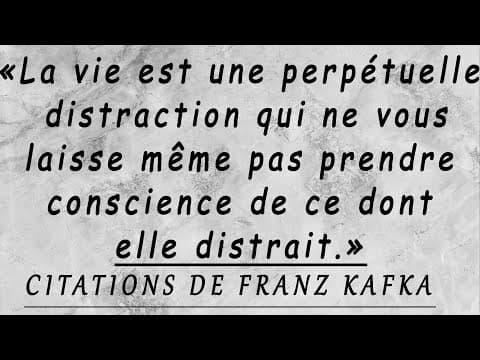
Franz Kafka's philosophy intertwines themes of existence, literature, and the human condition, emphasizing the complexities of life, the nature of happiness, and the pursuit of understanding oneself through art and literature.
Franz Kafka, a writer and philosopher, presents a unique perspective on life, existence, and the human condition. His thoughts, often expressed through his literary works, delve into the complexities of human emotions, societal structures, and the pursuit of understanding oneself. This blog post explores some of Kafka's profound insights and philosophical musings.
Kafka suggests that perception is not merely a passive act; rather, it is the images that seize our gaze. He reflects on how consciousness is inundated by these images, indicating a deeper connection between our experiences and our understanding of reality.
In his critique of societal phenomena, Kafka describes patriotic parades as one of the most repugnant aspects accompanying war. He argues that each revolution ultimately evaporates, leaving behind only a new bureaucracy. This observation highlights the cyclical nature of societal change and the often futile pursuit of progress.
Kafka also addresses modern nationalism, viewing it as a defensive reaction against the brutal imposition of civilization. This perspective invites readers to consider the implications of nationalism on individual identity and societal cohesion.
Kafka's exploration of love is deeply intertwined with self-discovery. He expresses a desire for a partner who can understand him completely, suggesting that true companionship offers a sense of stability and grounding. He poignantly states, "L'amour c'est que tu sois pour moi le couteau avec lequel je fouille en moi," which translates to love being the knife with which one digs into oneself. This metaphor illustrates the transformative power of love in understanding one's inner self.
Kafka believes that literature serves as an assault against the boundaries of understanding. He famously states that one should only read books that provoke and challenge, emphasizing the importance of literature in awakening the mind. He likens literature to a "coup de hache dans la mer gelée qui est en nous," suggesting that it breaks through the frozen layers of our consciousness.
Art, according to Kafka, hovers around the truth but does so with a deliberate intention to avoid being consumed by it. This delicate balance between seeking truth and maintaining artistic integrity is a recurring theme in his philosophy.
Kafka contemplates the nature of happiness, suggesting that it has the power to suppress aging. He posits that as long as one continues to ascend the metaphorical stairs of life, they will not cease to find new steps beneath them. This idea reflects the notion that personal growth and the pursuit of happiness are ongoing processes.
Kafka's reflections on existence reveal a deep understanding of the human condition. He asserts that the true reality is often unrealistic, challenging conventional notions of wealth and success. He argues that wealth is subjective, as one person's fortune may be another's burden.
Moreover, he emphasizes that the growth of an individual occurs from within rather than from external circumstances. This inward journey is crucial for self-awareness and personal development.
Franz Kafka's unique philosophy offers a profound exploration of existence, love, and the human experience. His insights encourage readers to reflect on their own lives, the nature of happiness, and the role of literature and art in understanding oneself. Kafka's work remains relevant today, inviting us to engage with the complexities of our own consciousness and the world around us.