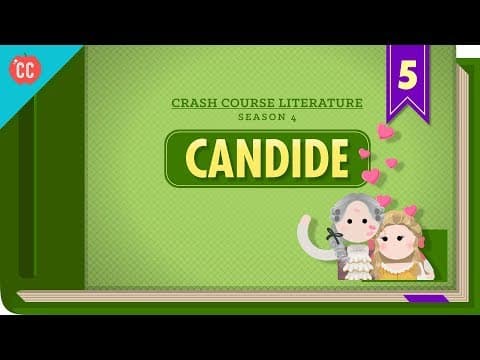
This blog post delves into Voltaire's 'Candide,' exploring its themes of optimism, the critique of philosophical determinism, and the human condition through a satirical lens. It discusses the plot, characters, and the philosophical implications of the narrative, ultimately questioning the balance between personal responsibility and societal issues.
Welcome to a deep dive into one of the most significant works of literature from the Enlightenment period, Voltaire's "Candide, or Optimism." This novel is not just a story; it is a profound critique of the philosophical optimism that was prevalent in the 18th century. In this post, we will explore the life of Voltaire, the plot of "Candide," its themes, and the philosophical questions it raises.
François-Marie Arouet, known as Voltaire, was born in Paris in 1694. His father envisioned him as a lawyer, but Voltaire had other aspirations—he wanted to be a writer. This desire led him to produce an extensive body of work, including essays, poems, and satirical dramas. Voltaire was known for his sharp wit and criticism of societal norms, which often landed him in trouble, including a stint in the Bastille for his controversial writings.
Voltaire championed two key beliefs: empiricism and religious tolerance. Empiricism emphasizes knowledge gained through experience and evidence, while religious tolerance advocates for acceptance of different beliefs. He identified as a Deist, believing in a God who created the universe but did not interfere with its workings.
Written in 1759 and published anonymously, "Candide" follows the misadventures of a young man named Candide. The story begins on his uncle's estate, where he lives a sheltered life with his cousin Cunegonde and his tutor, Dr. Pangloss. Pangloss teaches Candide that they live in the best of all possible worlds.
However, Candide's life takes a drastic turn when he is expelled from the estate after being caught kissing Cunegonde. His journey leads him through a series of harrowing experiences, including military service, witnessing the devastation of an earthquake in Lisbon, and encountering various characters who embody the harsh realities of life.
Throughout his travels, Candide faces numerous tragedies, including the death of friends and the harshness of human nature. Ultimately, he reunites with Cunegonde, who has suffered greatly, and they decide to cultivate their garden, symbolizing a shift from philosophical speculation to practical action.
At its core, "Candide" is a satirical response to the philosophical optimism espoused by thinkers like Gottfried Wilhelm Leibniz. Leibniz argued that since God is good, everything must be for the best in this world. Voltaire challenges this notion through the misfortunes that befall Candide and his companions, illustrating the absurdity of claiming that all suffering serves a greater purpose.
Voltaire's narrative raises significant questions about the existence of evil and suffering in the world. The Lisbon earthquake of 1755, which killed tens of thousands, serves as a backdrop for Candide's disillusionment. Pangloss's insistence that every misfortune is part of a divine plan becomes increasingly untenable as the story progresses.
While Voltaire critiques philosophical optimism, he does not descend into mere pessimism. Characters like the old woman, who has endured immense suffering yet still finds joy in life, suggest that despite the world's evils, there is still value in existence. This duality reflects Voltaire's belief that while humans are capable of great cruelty, they also possess the capacity for love and resilience.
The novel concludes with Candide and Cunegonde deciding to work on their garden, a metaphor for focusing on personal responsibility and practical action rather than abstract philosophical debates. This ending raises questions about the nature of happiness and the role of individuals in addressing societal issues.
Is it enough to tend to our own lives, or do we have a responsibility to help others? Voltaire's ambiguous conclusion invites readers to reflect on their own roles in a world filled with suffering and injustice.
"Candide" remains a powerful exploration of optimism, suffering, and the human condition. Through its satirical lens, Voltaire encourages readers to question the status quo and consider the complexities of life. As we ponder the balance between personal responsibility and societal issues, we are reminded of the importance of community and compassion in our shared human experience.
In the end, while cultivating our own gardens may provide solace, we should also strive to share our harvest with others, fostering a sense of collective responsibility in a world that often feels chaotic and unjust.