This blog post delves into William Blake's poem 'The Lamb' from his collection 'Songs of Innocence', exploring its themes of innocence, creation, and the connection to Jesus Christ, while contrasting it with his other poem 'The Tiger'.
William Blake, a prominent poet and artist, is known for his profound contributions to English literature. Among his notable works are two poetry collections: Songs of Innocence and Songs of Experience. In this blog post, we will explore the poem 'The Lamb', which is featured in Songs of Innocence. This poem embodies themes of innocence and purity, contrasting sharply with Blake's other work, 'The Tiger', which presents a more sinister view of the world.
Blake's poetry can be broadly categorized into two themes:
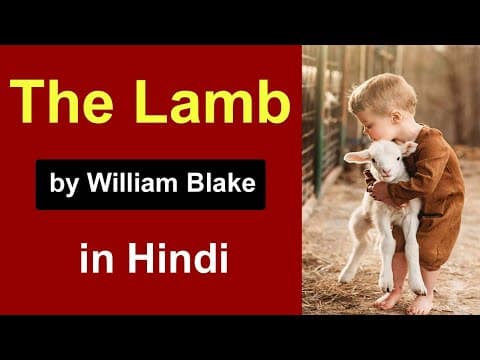
The poem 'The Lamb' is a quintessential example of the innocence celebrated in Blake's first collection. It features a child who poses questions to a lamb, symbolizing purity and gentleness.
The poem begins with a child asking the lamb several questions:
These inquiries set the stage for a deeper exploration of creation and the divine.
The lamb in the poem is not just an innocent creature; it represents the qualities of Jesus Christ. The child’s questions lead to the realization that the lamb is a reflection of Christ, who is often referred to as the "Lamb of God" in Christian theology. This connection highlights the themes of innocence and divinity, suggesting that both the lamb and Christ embody purity and gentleness.
In the second stanza, the child answers their own questions, revealing that:
Blake's poem 'The Tiger' serves as a stark contrast to 'The Lamb'. While 'The Lamb' celebrates innocence, 'The Tiger' explores the darker aspects of creation and existence. In 'The Tiger', Blake questions the nature of evil and the ferocity present in the world, asking how the same creator could make both the gentle lamb and the fearsome tiger.
This juxtaposition of the two poems illustrates Blake's exploration of duality in human experience—innocence versus experience, good versus evil.
William Blake's 'The Lamb' is a beautiful exploration of innocence, creation, and the divine connection to Jesus Christ. Through the child's innocent questions and revelations, Blake invites readers to reflect on the nature of existence and the qualities that define purity. In contrast, 'The Tiger' challenges us to confront the complexities of life, making Blake's work a profound commentary on the human condition.
For those interested in a deeper understanding of Blake's poetry, exploring 'The Tiger' alongside 'The Lamb' can provide valuable insights into the contrasting themes of innocence and experience.
In summary, Blake's poetry remains relevant today, encouraging readers to ponder the delicate balance between light and darkness in our world.