Despite recent challenges and negative headlines, data shows a significant generational shift with young voters moving away from the left, indicating that the MAGA movement is not dying but accelerating. Polls reveal a dramatic decline in Democratic support among Gen Z, suggesting a long-term political realignment favoring conservative values and signaling trouble for the Democratic Party's future.
The political landscape in the United States is often subject to fluctuations and short-term noise, especially around election cycles. However, a deeper look into generational voting trends reveals a more profound and lasting shift. Contrary to narratives suggesting that the MAGA (Make America Great Again) movement is fading or that the political right is losing ground, emerging data indicates that the movement is actually gaining momentum, particularly among younger voters.
This article explores the evidence behind this trend, analyzing polling data, generational shifts, and the broader implications for American politics.
Recent months, especially leading into the 2026 midterm elections, have been challenging for the GOP. Democrats have gained some momentum, and many commentators have expressed pessimism about the future of the MAGA movement. However, it is crucial not to get lost in the short-term noise and negative headlines.
While Democrats may win certain battles, such as midterm elections, the larger war appears to be shifting in favor of the right. This is primarily due to a generational trend that is reshaping the political landscape.
One of the most significant indicators of this shift is the changing political preferences of voters aged 18 to 29, commonly referred to as Generation Z. Historically, this demographic has leaned heavily towards the left, with Democratic leads peaking at around 35 points in 2018.
However, recent polling data from YUGOV reveals a dramatic decline in Democratic support among Gen Z voters:
This represents a 24-point drop over eight years, a nearly unprecedented rightward shift in young voters.
This trend aligns with the well-known political adage attributed to Winston Churchill: "If you're not a liberal when you're young, you have no heart. But if you're not a conservative when you're old, you have no brain."
As young people age, gain life experience, enter the workforce, pay taxes, and start families, they tend to adopt more conservative views. The current data suggests that Gen Z is already more conservative than previous generations at the same age, indicating a strong and accelerating rightward trend.
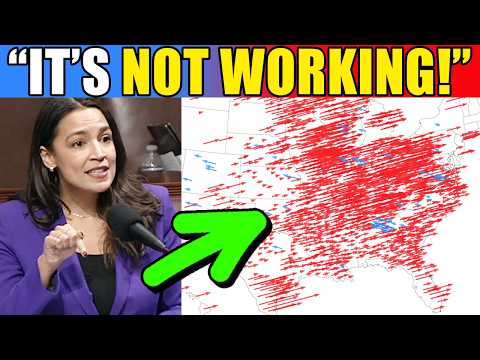
The shift is not limited to young voters but is also evident in the political dynamics of traditionally Democratic strongholds.
This political reversion is driven by widespread dissatisfaction with the Democratic Party's direction, including cultural and social policies, perceived corruption, and a focus on opposing former President Trump at all costs.
Within the Democratic Party, there is a growing influence of socialist ideology, which is reshaping the party's identity.
This shift towards socialism is seen by many as too extreme, fueling political backlash and driving young voters away from the left.
Similar trends are observable internationally. In the UK, young voters have shown surprising support for Reform UK, a right-wing party, over traditional left-wing parties like Labour. Street interviews reveal that many teenagers and young adults prefer Reform UK, a phenomenon that would have been unthinkable a decade or two ago.
This parallel underscores the broader generational rejection of left-wing politics in favor of more conservative alternatives.
The data and trends suggest a challenging future for the Democratic Party:
This could result in a political realignment lasting 10 to 20 years or more, with the GOP and conservative movements gaining ground.
Despite short-term setbacks and negative headlines, the MAGA movement and conservative politics are experiencing a significant generational resurgence. Young voters are moving away from the left at an unprecedented rate, and traditional Democratic strongholds are becoming more competitive.
The political landscape is shifting, and those who believe the MAGA movement is dead may need to reconsider. The data points to a future where conservative values gain increasing influence, reshaping American politics for years to come.
What do you think about these trends? Will the generational shift continue to favor conservative politics, or could new developments alter this trajectory? Share your thoughts and join the conversation.