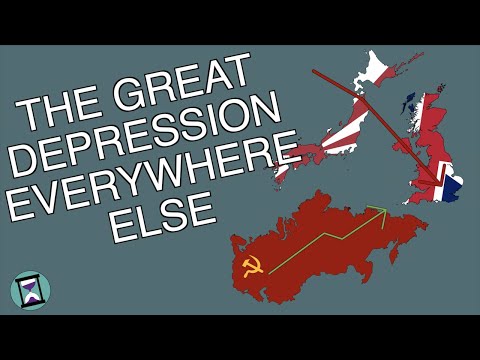
The Great Depression, beginning in the late 1920s, had varied effects on major global powers. While the United States and Germany faced severe economic downturns, countries like the USSR, Britain, France, Italy, and Japan experienced different challenges and responses, leading to unique recovery trajectories. This article explores how each nation dealt with the crisis and the long-term implications of their strategies.
The Great Depression was a catastrophic economic event that began in the late 1920s, primarily affecting the United States and Germany. However, its repercussions were felt worldwide, influencing the economies and political landscapes of many nations. This article delves into how the Great Depression impacted various global powers and the strategies their leaders employed to navigate the crisis.
The Great Depression was characterized by widespread business failures, massive unemployment, and a significant decline in international trade. As businesses collapsed, people lost their jobs, leading to a vicious cycle where reduced consumer spending further harmed businesses. This downward spiral had profound implications for economies around the globe.
In stark contrast to the United States, the Union of Soviet Socialist Republics (USSR) experienced minimal effects from the Great Depression. Isolated by international sanctions and largely cut off from cross-border trade, the USSR was able to leverage the decline of capitalist economies as a propaganda tool. The economic struggles in the West attracted many technical experts to the USSR, seeking better opportunities. This influx of talent contributed to significant economic growth in the Soviet Union, bolstering support for communism in various countries.
Britain's experience during the Great Depression differed markedly from that of the United States. The British government had been grappling with economic challenges since the end of World War I, which positioned it to better handle the impending crisis. Prime Minister Ramsay McDonald attempted to balance the budget amidst dwindling gold reserves, leading to tax increases and spending cuts. This political turmoil resulted in McDonald leaving the Labour Party to form a new coalition with the Conservatives.
By 1935, Britain began to recover from the depression, primarily due to its decision to abandon the gold standard. This allowed for the devaluation of the pound, boosting exports and reducing unemployment. Additionally, Britain initiated a program of military armament in anticipation of potential threats from Germany.
France managed to avoid the worst impacts of the Great Depression due to its self-sufficient economy, particularly in agriculture and manufacturing. While there was a slight increase in unemployment, the overall decline was less severe compared to other nations. However, France's adherence to the gold standard delayed its recovery. It wasn't until 1936 that France devalued the franc, which ultimately helped stimulate exports and economic growth.
Italy's response to the Great Depression was marked by a similar commitment to the gold standard. However, the Italian government viewed the crisis as an opportunity to consolidate control over the economy. When significant businesses failed, the government intervened, using its surplus funds to maintain wages and production. As a result, Italy's economy was one of the first in Europe to recover, gaining near-total control over its economic landscape.
Japan distinguished itself as the first major economy to rebound from the Great Depression. The Japanese government swiftly devalued its currency and invested heavily in keeping businesses afloat. This proactive approach led to rapid economic growth, positioning Japan favorably for future foreign ventures while European powers struggled to regain stability.
By the onset of World War II, most major powers had begun to recover from the Great Depression. However, it wasn't until the mid-1950s that these nations fully surpassed their pre-depression economic metrics. The varied responses to the Great Depression not only shaped the immediate recovery of these countries but also influenced their political and economic trajectories for decades to come. Understanding these historical contexts provides valuable insights into the complexities of global economic interdependence and the diverse strategies nations employ in times of crisis.





