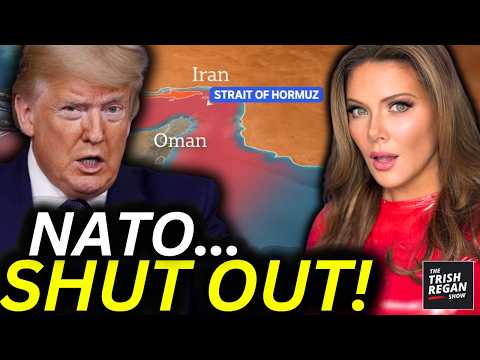
The U.S., under Donald Trump's leadership, independently secured the Strait of Hormuz, a critical geopolitical chokepoint, after NATO and European allies declined to assist. This move highlights tensions within NATO regarding burden-sharing and strategic priorities, with the U.S. emphasizing its economic strength and willingness to act unilaterally for global security. Meanwhile, Europe grapples with economic challenges and political missteps, prompting a reevaluation of their roles in global U.
Recently, significant geopolitical developments have unfolded around the Strait of Hormuz, a vital maritime passage. While NATO and European allies hesitated to engage, the United States, led by former President Donald Trump, took decisive unilateral action to secure the strait. This article explores the dynamics behind this move, the reactions from NATO and Europe, and the broader implications for international relations and security.
Currently, political leaders in Europe, including UK’s Starmer, France’s Macron, Germany’s Maloney, and others, have convened to discuss how to address the Strait of Hormuz situation. However, this meeting comes after the U.S. had already taken control independently. The European powers are now trying to "fix" a problem that the U.S. has effectively resolved.
The reluctance of NATO members to assist in this matter has been a point of contention. Despite the U.S. spending trillions on NATO, when a relatively smaller conflict arose involving the Strait of Hormuz and Iran, NATO members were not forthcoming with support. This has led to criticism from the U.S. side, emphasizing that the alliance did not stand by the U.S. in this instance.
Donald Trump openly criticized NATO members for their lack of support. He highlighted that while the U.S. has been heavily invested in NATO, the alliance did not reciprocate when the U.S. requested assistance in the Strait of Hormuz situation. Trump stated that the U.S. acted alone without seeking permission from European allies, prioritizing global security.
He was quoted saying, "Stay away. Not only do we not need your help, we don't want you anywhere near this thing because you might just mess it up." This blunt message underscores the frustration with NATO's inaction and Europe's hesitance to take risks.
The article also touches on the economic challenges faced by European countries. Nations like Spain, Italy, and the UK have economies significantly smaller than that of the U.S., with per capita incomes much lower. For example, the U.S. has a per capita income of around $80,000, while Spain and Italy are much lower.
Europe's economic struggles are compounded by political decisions, such as immigration policies that have brought large numbers of migrants into communities, further straining resources. The article mentions that Spain is expecting an additional 500,000 migrants this week alone.
These economic and political issues contribute to Europe's reluctance to engage in risky international operations like securing the Strait of Hormuz.
The U.S. spends nearly a trillion dollars on military and NATO-related activities, dwarfing the contributions of other NATO members. This disparity raises questions about the alliance's effectiveness and burden-sharing.
Trump has suggested reallocating resources away from countries like Spain, Italy, France, and the UK—where the U.S. maintains bases but faces restrictions or lack of cooperation—towards Eastern European countries such as Poland and Lithuania. These countries are perceived as being under greater threat from Russia and thus more deserving of support.
This strategic shift reflects a desire to prioritize security where it is most needed and to reduce support for countries seen as less cooperative or economically weaker.
The U.S. operation in the Strait of Hormuz is expected to lead to a peace deal potentially as early as the coming weekend. The administration has emphasized that it is not paying for uranium from Iran, countering some media theories.
This move could have generational impacts on global policy and security, possibly reshaping alliances and power dynamics in the Middle East and beyond.
Meanwhile, NATO is left to reconsider its role and effectiveness in this new geopolitical landscape, as it convenes meetings to address the aftermath of the U.S.'s unilateral action.
The U.S.'s independent securing of the Strait of Hormuz highlights significant tensions within NATO and between the U.S. and its European allies. Economic disparities, political disagreements, and differing risk appetites have led to a scenario where the U.S. felt compelled to act alone for the sake of global security.
As Europe grapples with internal challenges and NATO reassesses its strategy, the U.S. continues to assert its position as the dominant global power willing to take decisive action. The coming weeks will reveal how these developments influence international relations and the future of collective security arrangements.
This comprehensive overview captures the key points and context surrounding the U.S.'s recent actions in the Strait of Hormuz and the broader geopolitical implications involving NATO and Europe.