India has made a significant geopolitical shift by choosing to strengthen ties with China and Russia, moving away from reliance on the United States. This decision is driven by economic opportunities and a desire for regional autonomy, marking a pivotal moment in global power dynamics.
India has recently made a monumental decision that could reshape the future of global power dynamics by choosing to partner with China instead of the United States. This shift is poised to have far-reaching implications, as the 21st century is increasingly recognized as the era of Asia, with India emerging as a key player in the region.
According to the International Monetary Fund (IMF), India is projected to lead the world with a remarkable 7% growth target for 2024. Notably, the top four fastest-growing economies globally are all members of the BRICS alliance, which includes Brazil, Russia, India, China, and South Africa. This economic momentum highlights the significance of India within the Asian context.
Historically, the United States has recognized the importance of Asia, as evidenced by President Barack Obama's pivot to Asia strategy initiated in 2011. The plan aimed to strengthen ties with India to enhance American influence in the region and counterbalance China's rise. However, this strategy has not materialized as expected, and India has grown disillusioned with the promises made by the US government.
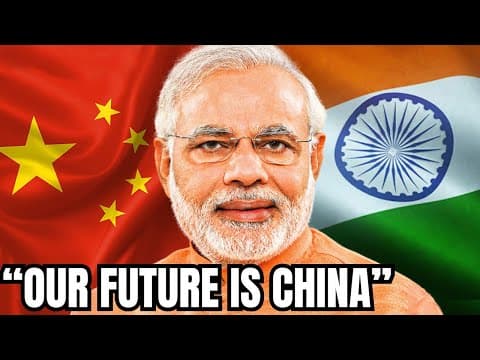
Prime Minister Narendra Modi has come to the realization that India's future lies in closer relations with China and Russia. As the US enters a new cold war with China, the need for India’s cooperation has become more pressing. At the recent BRICS summit, Modi reaffirmed India's commitment to strengthening ties with both China and Russia, signaling a significant geopolitical pivot.
Reports indicate that India has become Russia's second-largest supplier of restricted technology, further solidifying this new alliance. This shift is not merely a reaction to geopolitical tensions but a strategic move to secure India's economic future.
The 2024 BRICS summit has profound implications for global power dynamics. With Indonesia, Malaysia, Thailand, and Vietnam joining as strategic partners, BRICS is set to become a dominant force in Asia, a position the US has long sought to achieve. A key development from the summit was the resolution of territorial disputes between India and China, which had previously been a significant barrier to cooperation.
This resolution opens the door for a stronger partnership between the two nations, challenging the narrative that BRICS could not pose a threat to the G7 due to their historical conflicts.
The growth of BRICS represents a beacon of hope for developing countries that have long been under the influence of the so-called rules-based international order. With 18 new countries applying for BRICS membership and 13 new partner countries added this year, the alliance's future appears bright. This rapid expansion indicates that India no longer needs to rely solely on the US for economic growth and development.
Modi's government has faced criticism for its international relations strategy, particularly during its first two terms. Despite promises from the US that American companies would relocate their factories to India, the anticipated influx of investment has not materialized. Major American companies have exited the Indian market, and the notion that India would become the next China has proven overly optimistic.
Instead of becoming the world's factory, India has identified alternative avenues for growth. For instance, India has emerged as Europe's top fuel supplier, significantly increasing its imports of Russian oil since early 2022. This strategic move has allowed India to capitalize on the EU's energy crisis while maintaining a neutral stance in the geopolitical conflict surrounding Russia's invasion of Ukraine.
India's pivot towards China and Russia at the BRICS summit marks a significant turning point in its foreign policy and the global balance of power. After years of unmet promises and strained partnerships, India is prioritizing its economic future and regional autonomy. Modi's approach signals a desire for India to be treated as an equal partner in international relations, moving away from one-sided alliances.
As BRICS rises as a viable alternative for developing nations, the question of global leadership is evolving. India's decision to redefine its role on the world stage could shape the next decade of global politics, aligning with its long-term interests and ambitions. The implications of this shift will be felt not only in Asia but across the globe, as India charts a new course in its international relations.