On April 19th, an Iranian cargo ship defied the US naval blockade in the Gulf of Oman, leading to a decisive US military response that destroyed the ship's propulsion and resulted in its seizure. This enforcement action signals a new phase in US-Iran tensions, impacting Iran's oil revenue, its relationship with China, and the broader geopolitical landscape. The regime faces internal contradictions and dwindling allies as the conflict escalates.
For six straight hours, the captain of an Iranian cargo ship received repeated warnings from the US Navy, the most powerful naval force on the planet. The orders were clear: turn around, you are violating the blockade. Yet, the captain refused to comply. What happened next changed everything.
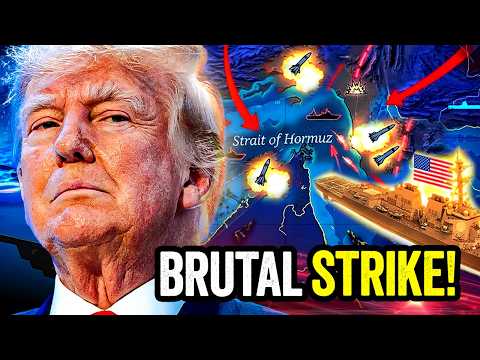
On April 19th, the Iranian-flagged cargo vessel Tosska was moving through the North Arabian Sea at 17 knots, heading toward the Iranian port of Bandar Abbas. This was a direct violation of the US naval blockade, which had been established on April 13th after the collapse of the first round of US-Iran peace talks in Islamabad.
The USS Bruins, a guided missile destroyer and one of the most capable surface combatants afloat, moved to intercept the Tosska. American forces issued multiple warnings over a six-hour period. When the Tosska's crew ignored these warnings, the US Navy took decisive action:
"Motor vessel Tosska, vacate your engine room. We are prepared to subject you to disabling fire."
The Tosska was hit in its engine room, destroying its propulsion and leaving the ship dead in the water. Within hours, marines from the 31st Marine Expeditionary Unit deployed from the USS Tripoli by helicopter and boarded the Tosska, seizing the vessel. It now remains in US custody.
This was the first deliberate, methodical, and professionally executed enforcement action since the blockade began. When the US announced the blockade, it was expected that Iran would eventually test its limits. The Tosska incident proved that the US Navy is not bluffing or posturing; it is authorized to use disabling fire and to seize vessels violating the blockade.
This enforcement action has significant strategic implications for Iran:
The blockade not only hurts Iran but also severs the financial lifeline between Iran and its chief financier, China. Analysts estimate that Iran is losing up to $435 million per day in war-related economic damage. Inflation in Iran was already above 50% before the conflict began, and now the blockade has proven to be effective and enforceable.
The Iranian regime faces a no-win situation:
This internal contradiction suggests that the regime's collapse is increasingly likely.
A two-week ceasefire is drawing to a close. During this period, the Iranian delegation in Islamabad was not there to make peace but to stall negotiations. IRGC officers were present to prevent any deal from succeeding.
The ceasefire allowed senior commanders and mid-level staffers of the IRGC to come out of hiding, but they have been under constant surveillance by US and allied intelligence assets, including satellites, drones, human intelligence, and AI-assisted targeting systems. Strike plans are ready, and when the ceasefire ends, the next phase of the conflict will be faster, more precise, and aimed at the regime's leadership and financial infrastructure.
Iran is losing allies in real time. For example, when IRGC gunboats fired on ships recently, two of those vessels were Indian. India, which Iran had cultivated as a friendly partner, responded with anger and summoned the Iranian ambassador.
France and Britain, after weeks of pretending neutrality, have quietly announced a multilateral mission to keep the Strait of Hormuz open, effectively siding with the US.
China remains the largest buyer of Iranian smuggled oil, but the blockade sends a message to Beijing: cooperate with Washington on Iran and trade negotiations, or face energy supply risks. Chinese President Xi Jinping has even offered to take Iran's leftover enriched uranium, seeking leverage before an upcoming summit with US President Trump.
The IRGC's ideological hardliners have no viable way out. Surrendering to US forces would destroy their ideological legitimacy, while continuing resistance will lead to military defeat and economic strangulation. The US has cut off their money, isolated their allies, surveilled their leadership, and prepared strike packages.
No matter what path the regime chooses, the outcome appears inevitable: the fall of the current Iranian regime.
This watershed moment in the Gulf of Oman marks a significant shift in US-Iran relations and has profound implications for regional and global geopolitics. The enforcement of the naval blockade demonstrates US resolve and capability, while Iran's internal contradictions and diminishing alliances suggest a regime under unprecedented pressure.
The coming weeks will be critical in determining the future of this conflict and the stability of the region.