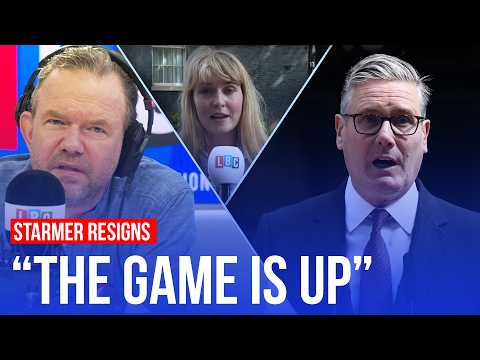
Keir Starmer has resigned as Prime Minister following a loss of support within his own Labour Party. His resignation marks another significant change in UK politics, reflecting broader democratic disruptions since Brexit. The leadership contest is set to begin in July, with Andy Burnham as a likely frontrunner. Public and political reactions reveal deep divisions and fatigue with current political discourse.
The political landscape in the United Kingdom has witnessed yet another significant upheaval with the resignation of Prime Minister Keir Starmer. This event marks another changing of the guard at Downing Street, continuing a decade-long period of extraordinary disruption to the democratic order since the Brexit vote.
The resignation comes as a result of a loss of confidence from his own parliamentary party. Despite the media frenzy and the harsh criticism from various factions within the Labour movement, it was ultimately Starmer's colleagues who delivered the "death note," signaling that he could no longer continue as leader.
Two contrasting public opinions highlight the complexity of the situation:
Both perspectives, though opposing, agree on the internal party dynamics being central to Starmer's downfall.
Starmer's resignation weekend revealed a stark absence of any rear-guard action or loyal faction within his party. Even his closest allies, such as Peter Kyle, failed to offer unequivocal support. This lack of a loyal base within the Labour Party was a clear indicator that his leadership was untenable.
The resignation has elicited a range of emotional responses. James O'Brien, reflecting on the situation, expressed a sense of deflation and fatigue rather than disappointment. He nostalgically recalled the era of John Major, a time when British politics felt more stable and less chaotic.
Social media's role in the current political climate was also highlighted, particularly the toxic discourse that has become commonplace. Starmer's recent Father's Day message on Facebook, intended as a heartfelt tribute, was met with vitriolic abuse from across the political spectrum, illustrating the deep divisions and hostility prevalent in public discourse.
In a poignant speech outside 10 Downing Street, Starmer acknowledged the decision of his parliamentary party and accepted it with good grace. He emphasized that every decision he made was about putting the country first and announced his intention to resign as Labour Party leader.
Key points from his speech included:
His emotional moment came when speaking about his children, revealing a more human side rarely seen in political figures.
The leadership contest officially begins with nominations opening on July 9. While Andy Burnham is widely expected to be the frontrunner, the contest remains open, with potential candidates like Wes Streeting, Alok Sharma, and John Healey possibly entering the race.
Unlike previous leadership transitions, Starmer's resignation does not guarantee a seamless handover to Burnham. The delay in starting the contest could affect Burnham's momentum, potentially encouraging other candidates to stand.
The Labour Party aims to have a new leader and Prime Minister in place by September, ready to lead the party into the next general election.
The rapid succession of prime ministerial resignations in recent years reflects a broader instability in British politics. Since the Scottish referendum and Brexit, the political environment has become increasingly volatile.
The public and political fatigue is palpable, with many longing for a return to a more stable and predictable political climate. The toxic nature of political discourse, amplified by social media platforms, has contributed to this sense of exhaustion and division.
Keir Starmer's resignation is a significant moment in UK politics, symbolizing both the internal challenges within the Labour Party and the broader democratic disruptions experienced over the past decade. As the Labour Party prepares for a leadership contest, the nation watches closely, hopeful for a return to stability and effective governance.
The coming weeks will be critical in shaping the future direction of the Labour Party and the UK's political landscape as a whole.