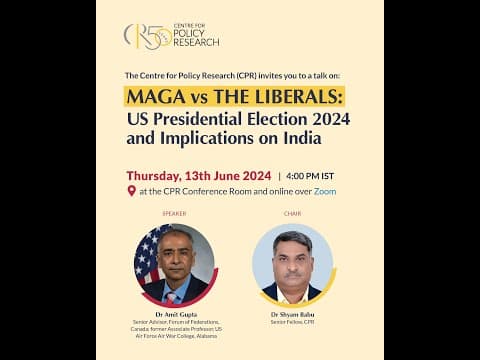
The upcoming 2024 US Presidential Election is marked by significant divides in American politics, influenced by economic, demographic, and ideological factors. The implications for India are complex, as both major candidates, Trump and Biden, lack emotional ties to India and view the relationship as transactional. The blog explores these dynamics and their potential impact on US-India relations.
The political landscape in the United States has become increasingly complex and dynamic, especially as we approach the 2024 Presidential Election. This blog post aims to dissect the current state of US politics, the implications for American foreign policy, particularly towards India, and the broader socio-economic divides that shape these dynamics.
The results of the last two presidential elections reveal a significant divide in American politics. In 2016, Hillary Clinton won 472 counties, while Donald Trump secured 258, with Clinton representing 64% of American GDP compared to Trump's 36%. In 2020, Joe Biden won 477 counties and garnered 81 million votes, yet he represented 70% of America's GDP against Trump's 29%. This economic divide is crucial in understanding the political landscape, as it highlights the disparity between urban and rural voters.
The battleground states that will be pivotal in the 2024 election include Arizona, Georgia, Michigan, Nevada, and Wisconsin. These states have shown a tendency to flip between parties, indicating that the same voters who supported Trump in 2016 could easily revert back in 2024. The close margins in these states underscore the volatility of American electoral politics.
Demographic shifts are also reshaping the political landscape. By 2045, minorities are projected to become the majority in the US, with significant implications for electoral politics. The racial displacement theory suggests that as the demographics change, so too will the political affiliations and priorities of the electorate.
Both Biden and Trump share a consensus on maintaining a unipolar international system, despite the reality of a multipolar world. Their foreign policy approaches differ significantly, particularly regarding strategic relationships with countries like England and Israel. Both administrations have shown unwavering support for Israel, often overlooking critical issues related to human rights and international law.
The primary strategic challenges facing the US include China, Russia, and the Middle East. Biden's approach has focused on confronting China, while Trump emphasized a more transactional relationship with Russia. The ongoing conflict in Ukraine and the situation in Gaza further complicate these dynamics, as both candidates navigate public opinion and international expectations.
Neither Trump nor Biden has strong emotional ties to India, viewing the relationship primarily as transactional. This perspective limits the potential for a deeper strategic partnership. The Quad alliance, often touted as a significant development in US-India relations, is seen as overhyped, with operational differences between the Indian military and its American counterparts.
Recent discussions around defense technology transfers have raised questions about the effectiveness of US-India military cooperation. The US has been hesitant to provide advanced technology, which could hinder India's defense capabilities in the long run. Moreover, both administrations have maintained a neutral stance on the India-China border dispute, indicating a lack of commitment to India's strategic interests.
India faces several long-term challenges that could impact its relationship with the US. These include environmental issues, educational shortcomings, and the need for a robust workforce capable of competing in the global economy. Addressing these challenges is crucial for India to enhance its standing in international relations.
The 2024 US Presidential Election is set against a backdrop of significant political, economic, and demographic divides. The implications for India are multifaceted, as both Trump and Biden approach the relationship from a transactional perspective. As India navigates its foreign policy, it must focus on long-term trends and challenges while fostering a pragmatic relationship with the US, avoiding entanglement in great power politics. The future of US-India relations will depend on India's ability to leverage its strengths and address its challenges effectively.