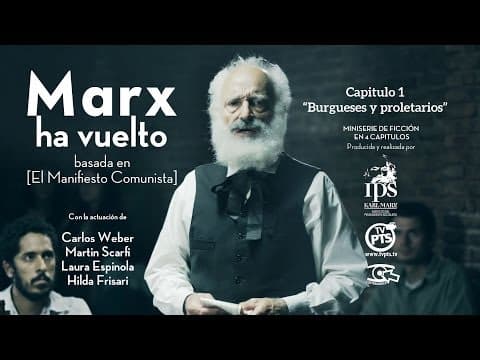
This blog post explores the key themes of class struggle as presented in the first chapter of the Communist Manifesto, highlighting the ongoing conflict between the bourgeoisie and the proletariat, the implications of capitalism, and the role of labor in society.
The resurgence of interest in Karl Marx's ideas, particularly those articulated in the Communist Manifesto, prompts a reevaluation of class dynamics in contemporary society. This blog post delves into the first chapter, "Bourgeois and Proletarians," to unpack the historical context and relevance of Marx's analysis of class struggle.
Marx famously stated that the history of all previous societies is the history of class struggles. This assertion underscores the perpetual conflict between different social classes throughout history, including:
These opposing forces have engaged in an ongoing war, sometimes overt and sometimes concealed, reflecting the inherent tensions within societal structures.
In the modern era, particularly following the decline of feudalism, the bourgeoisie emerged as a dominant class. This new class did not eliminate class antagonisms but rather established new forms of oppression and struggle. Marx argues that the current societal landscape has simplified these antagonisms, leading to a clear division between two primary classes:
This simplification allows for a more straightforward analysis of class relations, as these two groups face each other in direct opposition.
The proletariat, or working class, is characterized by its labor, which is essential for the functioning of capital. Marx emphasizes that capital is a collective product, reliant on the united action of society's members. However, the nature of labor has transformed:
As a result, wages are kept low, sufficient only for subsistence, ensuring that workers return to the factory day after day. This cycle perpetuates their subjugation, as they are not only bound to the machines but also to the capitalist system that prioritizes profit over human dignity.
Marx posits that all class struggles are inherently political. The proletariat's emergence leads to a struggle against the bourgeoisie, which may result in temporary victories for workers. However, these victories are often fleeting. The true outcome of these struggles is the increasing unity among workers, which is crucial for challenging the status quo.
The themes presented in the first chapter of the Communist Manifesto remain relevant today as society grapples with issues of inequality and class conflict. Understanding the dynamics between the bourgeoisie and the proletariat provides insight into the ongoing struggles faced by workers in a capitalist system. As we reflect on Marx's ideas, it becomes clear that the fight for labor rights and social justice continues, echoing the sentiments of the past while demanding attention in the present.
As we await the release of further chapters exploring Marx's theories, it is essential to engage with these ideas critically and consider their implications for our current socio-economic landscape. The dialogue surrounding class struggle is far from over, and Marx's insights offer a valuable framework for understanding the complexities of modern society.