Nathaniel Hawthorne's The Birthmark tells the story of a scientist obsessed with removing a small birthmark from his wife's cheek, believing it to be her only flaw. His pursuit of perfection leads him to use alchemy and magic, ultimately causing his wife's death. The story highlights the dangers of valuing physical perfection over human imperfection and love.
Nathaniel Hawthorne's short story, The Birthmark, is a profound exploration of human obsession with perfection and the tragic consequences that can arise from it. The story, as narrated by Stephanie Lash, centers around a young scientist whose life is dominated by logic, reason, and the pursuit of flawlessness.
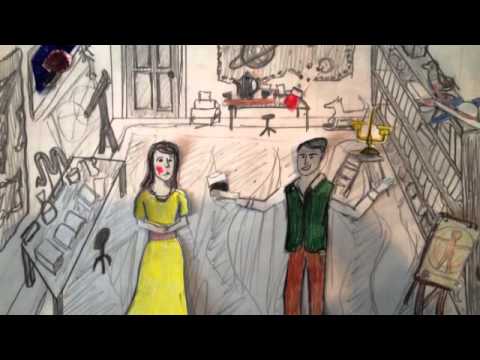
The protagonist is a young scientist who is more familiar with flasks and beakers than with love or the outside world. He is a man driven by lofty ideals of logic, reason, and symmetry, showing little interest in anything beyond his scientific pursuits.
One day, the scientist falls in love with Georgiana, the most beautiful woman he has ever seen. Georgiana is described as sweet, kind, and beloved by all who know her. To the scientist, she appears to be the most perfect creature. He woos her with exotic flowers and perfumes he creates in his laboratory, and soon they marry.
After their marriage, when the initial infatuation fades, the scientist notices a small birthmark on Georgiana's cheek. This birthmark, a tiny red hand, mars her otherwise perfect appearance. The scientist grows to hate this flaw and soon cannot bear to look at her.
Weeks pass in silence until the scientist asks Georgiana if he might remove the birthmark. Georgiana fears the mark, seeing it as a stain on her cheek as deep as life itself. However, the scientist laughs off her fears and promises he can correct what nature has left flawed.
He dedicates himself to making her cheek as alabaster and flawless as its sister cheek. His obsession leads him to create various plasters and potions, but none succeed.
Knowing that failure would drive him mad, the scientist delves into the secrets of the Earth, turning to the forbidden arts of alchemy and magic. After months of searching, he finally discovers a cure.
The scientist presents the cure to Georgiana, who drinks it deeply. They wait silently as the little hand fades from her cheek. The scientist cheers, believing he has fixed her one imperfection.
However, despite the birthmark's disappearance, Georgiana grows paler and eventually drops the goblet. When the scientist asks what is wrong, she tells him that he has aimed too high and rejected the best the Earth could offer. She is dying.
The scientist catches Georgiana as she falls and grieves deeply. Her spirit floats to heaven after he has loosened the one bond that kept her angelic spirit tied to her mortal frame.
The Birthmark is a cautionary tale about the dangers of obsession with physical perfection and the rejection of natural human imperfection. The scientist's inability to accept Georgiana's birthmark, a minor flaw, leads to tragic consequences. The story suggests that the pursuit of perfection, especially when it involves tampering with nature, can have fatal results.
It also explores the conflict between science and nature, reason and emotion, and the limits of human control over life. Georgiana's acceptance of her birthmark contrasts with her husband's relentless desire to remove it, highlighting the tension between acceptance and obsession.
Nathaniel Hawthorne's The Birthmark remains a powerful narrative about love, obsession, and the human condition. It warns readers about the perils of valuing superficial perfection over the deeper qualities that make us human. The story encourages acceptance of imperfection as an intrinsic part of life and love.