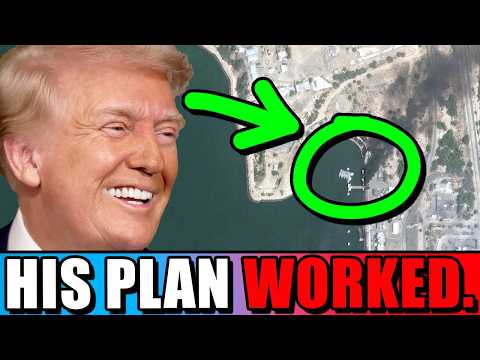
Recent satellite images and expert analysis indicate that Iran is running out of oil storage capacity due to a U.S.-led blockade, supporting claims that former President Trump's strategy to pressure the Iranian regime is effective. Despite media skepticism, the situation on the ground shows Iran's desperation, with potential for internal unrest as the economic squeeze tightens.
The ongoing geopolitical tension surrounding Iran has been a subject of intense debate and media coverage. Former President Donald Trump has taken a bold and ambitious approach aimed at dismantling the Iranian regime through economic pressure and strategic blockades. While many reports claim that Trump's efforts are failing and that Iran is outmaneuvering the U.S., recent developments and satellite imagery suggest otherwise.
This article delves into the latest evidence, analyzing the effectiveness of the blockade strategy and what it means for the future of U.S.-Iran relations.
The fundamental question in this complex situation is straightforward: Is the blockade imposed by the U.S. working to pressure Iran?
Iran's perceived trump card has been its ability to threaten the Strait of Hormuz, a critical chokepoint through which approximately 25% of the world's oil supply passes. Iran believed this gave it significant leverage in negotiations. However, the U.S. responded with a blockade on Iranian oil exports, effectively a "blockade on the blockade."
The logic behind this strategy is clear: Iran has numerous active oil wells that require continuous export to avoid damage. If oil cannot be exported, wells must be capped, a process that risks clogging and potentially ruining the wells, which would be catastrophic for Iran's economy.
Contrary to Iranian claims of having indefinite oil storage capacity, satellite images reveal a different reality. Iran has resorted to using a 30-year-old tanker, the Nashup, stationed near Kar Island, as emergency floating storage for its overflowing crude oil supply.
While the exact capacity of the Nashup is uncertain, it is likely far less than modern supertankers, which can hold between 2 to 4 million barrels of oil. Given that Iran's oil wells produce over a million barrels per day, this floating storage solution is a temporary fix at best.
Experts estimate that Iran has between 10 to 20 days of storage capacity left before it runs out of space to store its oil. This shortage signals that Iran is running out of time and options.
The blockade's pressure extends beyond oil storage. Iran must continue to pay its soldiers and provide food and fuel to its population to maintain internal stability. Without sufficient resources, the regime risks facing unrest and potential revolution.
Analysts predict that within two to three months, the economic squeeze could lead to significant public grievances boiling over into street protests and internal turmoil.
Mainstream media and left-leaning commentators have portrayed Trump's strategy as chaotic and doomed to fail, often suggesting he lacks a coherent plan. However, the facts on the ground, supported by satellite imagery and expert analysis, tell a different story.
Trump himself has stated that the U.S. "holds all the cards" and that the Iranian regime is desperate, sending multiple deal proposals. He emphasized that Iran cannot have a nuclear weapon and that negotiations will continue only under terms acceptable to the U.S.
The current situation is a strategic experiment, unprecedented in its approach. While it is too early to declare a definitive victory, the evidence suggests that the blockade is exerting significant pressure on Iran.
The next critical developments to watch include:
Despite skepticism and negative media portrayals, the emerging evidence indicates that Trump's strategy to economically isolate and pressure Iran is having tangible effects. Iran's dwindling oil storage capacity and the regime's desperation underscore the effectiveness of the blockade.
While the situation remains fluid and complex, the countdown is on. The coming weeks and months will reveal whether this strategy leads to significant change within Iran or if new challenges will arise.
For now, the facts appear to be more aligned with Trump's approach than with the narratives of failure and chaos.
This analysis is based on current satellite data, expert opinions, and statements from involved parties, providing a comprehensive view of the evolving geopolitical landscape surrounding Iran and U.S. foreign policy.