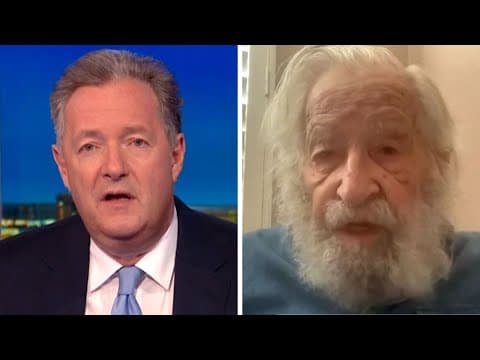
In a compelling interview, Noam Chomsky discusses the current state of global politics, the threats of nuclear war, climate change, and the challenges to free speech in the West. He emphasizes the urgency of addressing these issues while critiquing both U.S. foreign policy and domestic political trends.
In a recent interview, Piers Morgan sat down with Noam Chomsky, a renowned linguist, philosopher, and political activist, to discuss the pressing issues facing the world today. Chomsky, who has authored over 150 books, shared his thoughts on the state of global politics, the threats of nuclear war, climate change, and the challenges to free speech in the West.
Morgan opened the conversation by referencing the Doomsday Clock, which symbolizes the likelihood of a global catastrophe. Chomsky noted that the clock, originally set at seven minutes to midnight in 1947, has now moved to 90 seconds to midnight, reflecting the increasing threats humanity faces. He identified three major concerns:
Nuclear War: Chomsky highlighted the growing risk of nuclear conflict, particularly in light of the ongoing war in Ukraine and tensions with Russia. He warned that if Putin were to face defeat, he might resort to using nuclear weapons.
Climate Change: The urgency of addressing climate change was another critical point. Chomsky emphasized that humanity has a couple of decades to implement known methods to mitigate climate destruction before reaching irreversible tipping points.
Artificial Intelligence: While acknowledging concerns about AI, Chomsky dismissed the idea that it poses an imminent threat, suggesting that fears of AI reaching a point of self-design are largely speculative.
Morgan probed deeper into the potential for nuclear war, particularly regarding the situation in Ukraine. Chomsky expressed concern that the West is underestimating Putin's willingness to escalate the conflict, especially if he feels cornered. He also pointed out that U.S. military strategy has been increasingly focused on preparing for potential conflicts with China, which could also lead to catastrophic outcomes.
The discussion shifted to U.S.-China relations, particularly regarding Taiwan. Chomsky explained that the One China policy, established in the 1970s, has maintained peace for decades. However, he criticized the U.S. for abandoning this policy and escalating tensions with China through military maneuvers and alliances.
Chomsky argued that the moral imperative should be to prevent conflict rather than provoke it. He noted that there is currently no indication that China plans to invade Taiwan, but U.S. actions could change that dynamic.
The conversation then turned to the topic of free speech, which Chomsky described as being under attack in the West. He criticized recent laws in Florida that restrict the teaching of authentic American history and the removal of books from libraries. Chomsky argued that these actions reflect a broader trend of censorship and a misunderstanding of critical race theory, which he described as a mischaracterization used by the right to suppress discussions about racism and history.
Morgan and Chomsky also discussed the rise of what Morgan termed "ultra-woke liberalism," which he likened to a form of fascism due to its attempts to control thought and suppress dissent. Chomsky acknowledged that while some young people have adopted cancellation tactics, the broader issue of censorship has long been a problem in political discourse.
As the interview progressed, Morgan asked Chomsky about his greatest achievements and moments in life. Chomsky reflected on his efforts to stop the U.S.-backed Indonesian invasion of East Timor and his opposition to the Vietnam War as significant contributions to social and political justice.
When asked about the best and worst U.S. presidents of his lifetime, Chomsky praised Franklin D. Roosevelt while criticizing Donald Trump for his policies and approach to governance. He expressed concern about the implications of Trump's potential return to power.
In closing, Chomsky emphasized the importance of addressing the real threats facing humanity today rather than getting lost in speculative fears. He expressed a desire for his legacy to reflect his efforts to promote understanding and justice in a world fraught with challenges.
The interview with Noam Chomsky serves as a stark reminder of the complexities of global politics and the urgent need for thoughtful discourse and action in the face of existential threats.