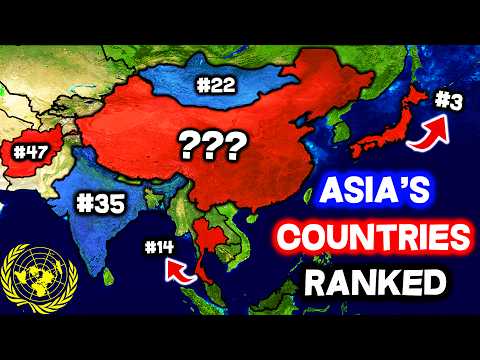
This blog post ranks all 48 countries in Asia based on various factors including economy, safety, cost of living, corruption, freedom, and quality of life. The analysis reveals the stark contrasts between the worst and best countries, highlighting the challenges faced by nations like Yemen and Afghanistan, while celebrating the successes of countries like Singapore and Japan.
Asia, the largest and most diverse continent, is home to 4.8 billion people living across 48 distinct countries. This blog post assesses these nations based on their economy, safety, cost of living, corruption, freedom, and quality of life, ranking them from worst to best.
Yemen, known as the birthplace of coffee and rich in ancient history, is currently facing a devastating civil war. This conflict has resulted in one of the worst humanitarian crises in the world, with over 150,000 deaths since 2015 and millions displaced. Yemen's situation is dire, with a lack of food, water, and sanitation leading to additional fatalities.
Once a stable nation and a tourism destination, Afghanistan has been embroiled in conflict since 1978. The Taliban's return to power in 2021 has worsened living conditions, leading to the world's lowest life expectancy at just 54 years. The ongoing violence and poverty make Afghanistan the poorest nation in Asia.
Syria has been in a civil war for over a decade, resulting in more than 600,000 deaths and widespread poverty. Despite better life expectancy and sanitation standards compared to Yemen and Afghanistan, 90% of Syrians live in poverty, making it the third most dangerous country in Asia.
North Korea's secretive regime and totalitarian dictatorship create a society with no freedom of speech. While education is reportedly good, the lack of reliable data on living conditions makes it difficult to assess the true quality of life. The oppressive government leads to severe human rights abuses.
Despite being home to the Human Development Index's inventor, Pakistan struggles with one of the lowest HDI scores globally. Corruption, a poor education system, and extreme religious fanaticism hinder progress. The country has the world's worst blasphemy laws, leading to violence against those accused of criticizing Islam.
Myanmar is currently under military dictatorship, with poverty rates soaring back to 60% since the military coup. The ongoing civil war has resulted in significant loss of life and displacement.
Timor-Leste, despite its stunning biodiversity, remains one of the least visited countries due to its isolation and a history of occupation that has left it underdeveloped.
Cambodia's tragic history of genocide has left lasting scars, with high poverty rates and unexploded landmines still present. However, the warmth of the Cambodian people shines through.
Home to Mount Everest, Nepal has a low cost of living but also low wages, making it one of the poorest countries in Asia.
Laos, while relatively wealthy compared to its neighbors, suffers from poor geography and a corrupt government, leading to economic challenges.
Despite fertile land, rampant corruption has led to Bangladesh being one of the poorest nations, with severe pollution and overcrowding in its capital, Dhaka.
Turkmenistan's former president focused on grandiose marble buildings rather than improving citizens' lives, leading to a lack of civil liberties and economic stagnation.
India has the world's fifth-largest economy but faces challenges such as corruption, overpopulation, and significant wealth disparity.
Iraq is recovering from years of conflict, with a growing economy and beautiful landscapes, but still struggles with poverty and access to clean water.
Tajikistan is one of the poorest nations but offers a vibrant culture and stunning landscapes, making it a safe place to live.
Kyrgyzstan is rich in natural resources but suffers from corruption. However, it has low income inequality and a beautiful mountainous landscape.
Lebanon faces a severe liquidity crisis, high inflation, and a corrupt government, leading to widespread poverty despite its rich culture.
The Philippines has a rich culture but suffers from corruption and poor infrastructure, leading to high poverty rates and pollution.
Jordan is stable and receives significant foreign aid, but its economy is stagnating, leading to high unemployment.
Bhutan prioritizes sustainability and has low corruption, making it a safe and affordable destination despite its closed-off history.
Uzbekistan is authoritarian but is making strides towards liberalization and values education, boasting a 100% literacy rate.
Iran has a rich culture and history but suffers from severe censorship and economic sanctions, leading to high inflation and human rights abuses.
Indonesia is biologically diverse but struggles with infrastructure outside major islands. Its economy is developing rapidly, poised for growth.
Vietnam has transformed from one of the poorest nations to a manufacturing powerhouse, but corruption and pollution remain issues.
Azerbaijan has a strong economy due to oil but faces issues with human rights and freedom of expression.
Armenia is safe and has a rich culture, but economic struggles lead to a significant outflow of its population.
Mongolia offers a low cost of living and safety, but its vast land is sparsely populated, leading to economic challenges.
Sri Lanka has a long democratic history but faces economic crises due to corruption and mismanagement, leading to high inflation.
Georgia is known for its beautiful landscapes and rich culture, but economic struggles persist, exacerbated by recent geopolitical tensions.
The Maldives is a paradise for tourists but struggles with high living costs and a lack of resources for locals.
Russia's vast land offers safety and resources, but the lack of freedoms and harsh climates pose challenges for its citizens.
Kazakhstan is rich in minerals and has made strides towards democracy, but corruption remains a significant issue.
China's rapid development has lifted millions out of poverty, but it faces challenges with wealth disparity and authoritarian governance.
Thailand is a popular tourist destination with a rich culture, but corruption and low wages hinder economic growth.
Oman is stable and safe, benefiting from oil wealth, but faces challenges as reserves dwindle.
Malaysia has diversified its economy and invested in education, leading to a growing middle class and low living costs.
Brunei offers a high quality of life due to its oil wealth, but the lack of job opportunities leads to a reliance on welfare.
Kuwait's oil wealth provides a high standard of living, but its harsh geography limits economic diversity.
Saudi Arabia's oil wealth has transformed its economy, but human rights abuses and limited freedoms remain significant issues.
Bahrain has diversified its economy beyond oil, becoming a hub for tourism and banking, attracting many visitors from neighboring countries.
Turkey's rich history and culture make it a fascinating destination, but economic disparities exist between its regions.
Qatar's vast natural gas reserves have made it one of the wealthiest nations per capita, with a high standard of living.
Cyprus boasts a booming economy and excellent healthcare, but political divisions continue to affect its stability.
The UAE has a diverse economy and is known for its tolerance towards non-Muslim immigrants, making it a unique destination in the region.
Israel's economy is based on human capital, with significant investments in education and healthcare, leading to high levels of innovation.
South Korea is known for its advanced infrastructure, high life expectancy, and strong economy, but faces challenges with work-life balance.
Japan offers a unique blend of culture, safety, and quality of life, maintaining a strong economy despite demographic challenges.
Singapore stands out as the best country in Asia, combining a strong economy, low corruption, and high quality of life, despite limited freedoms.
The ranking of Asian countries reveals a continent of stark contrasts, from the dire situations in Yemen and Afghanistan to the thriving economies of Singapore and Japan. Understanding these differences is crucial for appreciating the complexities of life across Asia.