A decade after the UK's vote to leave the EU, this article examines the promises made during the Brexit campaign and assesses their outcomes. It explores the effects on the NHS funding, immigration control, trade relationships, and political landscape, revealing a complex legacy of mixed results, economic challenges, and increased political division.
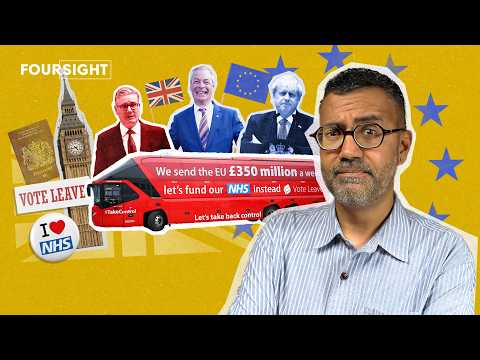
Ten years ago, a red bus emblazoned with a bold promise became a symbol of the Brexit campaign. The bus claimed that leaving the European Union would free up £350 million a week to be spent on the National Health Service (NHS). Alongside this, the Vote Leave campaign promised control over immigration and borders, free trade with the world, and a restoration of sovereignty to the British people.
On June 23, 2016, the UK voted to leave the EU by a narrow margin. This article revisits those promises and investigates whether they have been fulfilled, exploring the real impact of Brexit on the UK’s politics, economy, and society.
The £350 million weekly figure was a central claim of the Vote Leave campaign. However, investigations at the time revealed this number was misleading. Much of the money paid to the EU was returned to the UK through rebates and funding for farmers, universities, and poorer regions. The actual net figure was closer to £110 million per week.
In the eight years following the Brexit vote, healthcare spending in England increased by nearly £700 million per week, excluding additional funds allocated to combat COVID-19. Former Prime Minister Theresa May referred to this as a "Brexit dividend."
However, Brexit itself imposed significant costs on the UK, including a £30.5 billion bill to leave the EU, economic shrinkage, and reduced investment. It remains unclear whether the NHS funding increases would have occurred without Brexit.
Dr. Leila McKay, former director of policy at the NHS Alliance, highlights three main Brexit impacts on the NHS:
Workforce: There was a steep decline in EU healthcare staff joining the NHS after Brexit. To compensate, the NHS has increasingly relied on non-EU migrants, many from countries with their own healthcare staff shortages, raising ethical concerns.
Medicines: Brexit has caused more medicine shortages due to increased bureaucracy and customs procedures, adding to costs and delays.
Financial Envelope: While cash spending increased, it barely covers the NHS's minimum needs and is not directly linked to Brexit.
One of the Vote Leave promises was to regain control over immigration and establish a fairer, skills-based system.
At the time of the Brexit vote, net migration was 321,000. Within a year, it fell to 200,000 due to reduced EU migration as many Europeans left the UK. However, immigration from non-EU countries rose significantly, especially after Boris Johnson introduced a new points-based immigration system post-Brexit.
By March 2023, net migration reached a record high of 944,000, nearly three times the level at the Brexit vote. Subsequent government tightening has reduced net migration to 171,000.
The issue of asylum seekers arriving on small boats has become highly visible and divisive. Some asylum seekers come to the UK after being refused asylum in EU countries, seeking a second chance. It is unclear how Brexit has affected this phenomenon, but it dominates public debate and perceptions of immigration.
Despite net migration falling to its lowest in years, many in the UK believe immigration is increasing, influenced by the visibility of small boat arrivals and political discourse.
Vote Leave promised that Brexit would enable the UK to strike free trade deals worldwide, boosting jobs and the economy.
Since Brexit, the UK has signed free trade agreements with Japan, Australia, New Zealand, and is close to finalizing a deal with India. Partial agreements with the US are ongoing.
However, businesses involved in trade report increased paperwork, restrictions, and losses. For example, a haulage company in Dover experienced significant losses and driver shortages due to new regulations. Similarly, the UK's largest mussel production area in North Wales has suffered due to EU import rules no longer accepting certain UK waters.
The UK's budget watchdog estimates that Brexit has reduced exports and imports by around 15% and negatively impacted long-term productivity. Other research predicts reductions in GDP, investment, and employment by 2025 due to Brexit, even accounting for COVID-19 and the Ukraine war.
Professor Anand Menon notes that the UK economy was already struggling before Brexit, with stagnant wages and slow growth since 2008. Brexit is one of several economic challenges.
Lord Elliot, a Vote Leave campaign leader, argues that UK trade with the EU is higher now than when in the EU and that the UK has increased trade faster than most countries. However, government reports suggest trade levels are still below what they would have been if the UK had remained in the EU.
Brexit was expected to restore control and stability to UK politics, but the reality has been different.
Since the referendum, the UK has seen six prime ministers, with the two main parties' vote shares dropping from over 80% in 2017 to around 20% each. Smaller parties like Reform UK and the Greens have gained ground.
Political scientist Maria Sobelka explains that Brexit tapped into deep identity divides in the UK, between traditionalist British identities and cosmopolitan liberal ones. The referendum did not resolve these tensions but intensified them.
Many people feel powerless and distrust politicians, despite the promise of "taking back control."
Matthew Elliott, chief executive of the Vote Leave campaign, maintains that Brexit delivered on its central promise: the UK left the EU, regained control, and secured new trade deals. He emphasizes that political will, not Brexit itself, determines outcomes like NHS funding.
He disputes that immigration was the main issue for voters, stating sovereignty was the primary concern. He acknowledges the £350 million NHS figure was misleading but argues that the UK has regained accountability in politics.
Ten years on, Brexit's promises have yielded mixed results:
Ultimately, Brexit has left the UK more disillusioned and divided, with many promises unfulfilled or complicated by unforeseen consequences. The real legacy of Brexit may be this enduring political and social fracture.
This comprehensive review highlights the complexity of Brexit's impact, showing that while some goals were achieved, many challenges remain for the UK as it navigates its post-EU future.