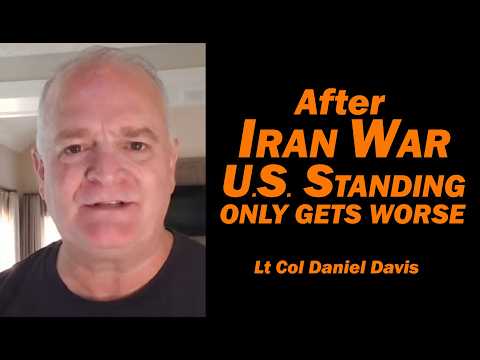
The ongoing conflict with Iran has led to a strategic loss for the U.S., with no clear path to victory. The war's economic and geopolitical consequences are widespread, affecting global oil prices, allied nations, and regional stability. Despite U.S. military strength, ammunition shortages and diplomatic failures hinder progress, while Iran's resilience and international pressures complicate resolution efforts.
The ongoing conflict between the United States and Iran, which began on February 28, has evolved into a complex and costly situation with no clear resolution in sight. Despite intense combat in the initial 40 days and a tenuous ceasefire that functions more as a pause, the strategic position of the U.S. continues to deteriorate. This article explores the realities of the war, the media narratives, the economic and geopolitical consequences, and the prospects for negotiation and resolution.
The American mainstream media presents a fragmented and often unrealistic portrayal of the war. On some networks, the conflict is depicted as a clear-cut victory for the U.S., with claims of Iranian disarray and imminent defeat. Conservative and neutral outlets often echo this sentiment, praising the administration's handling of the war.
However, this narrative is far removed from reality. For example, a recent panel discussion on a major network featured guests who described Iran as completely confused and leaderless following a decisive first strike that reportedly eliminated the Supreme Leader and 40 top officials. The assertion was made that Iran's command and control have collapsed, and that the U.S. demands unconditional Iranian surrender under threat of destruction.
This portrayal is not only inaccurate but also morally troubling. It reflects a dark mentality of "do what we say or be destroyed," which contradicts the values many Americans hold dear. Such rhetoric is widely accepted without pushback, indicating a disturbing acceptance of aggressive and uncompromising foreign policy stances.
Contrary to media claims, Iran remains a sophisticated and resilient state. Despite the loss of key leaders, the Iranian government and military institutions continue to function effectively. The decision-making process is collective, involving a council rather than any single individual, which complicates efforts to negotiate or force a quick resolution.
Iran has publicly stated that it will not negotiate until the U.S. lifts its blockade. The blockade, along with Iran's own restrictions on hostile neighboring countries, has created a standoff where neither side is willing to make concessions. This deadlock has led to a prolonged economic and humanitarian crisis.
The war and associated blockades have caused significant disruptions in global oil markets. The price of Brent crude oil has remained high, recently reported at around $105 per barrel, despite efforts by the U.S. administration to manipulate the market.
The blockade affects not only Iran but also U.S. allies and global economies:
The reduction in energy inputs leads to decreased GDP and economic recession, a consequence that is becoming increasingly apparent worldwide.
The U.S. currently has three aircraft carrier strike groups in the region, providing significant firepower. However, military effectiveness is constrained by ammunition shortages. Reports indicate that the U.S. has already expended about half of its stockpile of long-range stealth cruise missiles, Tomahawks, Patriots, and other munitions.
Replacing these stockpiles will take years, a timeline that does not align with the immediate demands of the conflict or potential future conflicts with other global powers like China or Russia.
Moreover, military strikes are unlikely to achieve strategic objectives such as toppling the Iranian regime, opening the Strait of Hormuz, or eliminating nuclear capabilities. Iran's geographic advantages, including mountainous terrain and underground facilities, make it difficult to decisively defeat through conventional military means.
Recent diplomatic efforts involve U.S. envoys Jared Kushner and Steve Whit being sent to Pakistan to facilitate communication with Iran. However, Iran has publicly stated that no direct negotiations with the U.S. are occurring until the blockade is lifted.
The U.S. media often misrepresents these developments, portraying Iran as untrustworthy for reimposing sanctions after an initial agreement. In reality, the U.S. maintained its blockade despite promises to lift it, leading Iran to reciprocate.
Without genuine negotiation and mutual concessions, the status quo is likely to persist, prolonging the conflict and its associated costs.
The conflict has revealed a troubling mindset within some U.S. leadership circles, characterized by an insatiable desire for dominance and willingness to use force to achieve objectives. This mentality risks alienating allies and escalating tensions with NATO members, some of whom reportedly consider sabotage operations against U.S. interests.
There is also concern about the health and political future of President Trump, whose administration's policies have shaped the current conflict. The possibility of continued aggressive actions without strategic foresight raises alarms about the long-term consequences for U.S. global standing and security.
The war with Iran has resulted in a strategic loss for the United States, with no clear path to victory or improved standing. The conflict has inflicted widespread economic damage, strained alliances, and exposed limitations in military and diplomatic strategies.
Both Iran and the U.S. face significant challenges, but Iran's resilience and the global economic impacts suggest that the U.S. may not be able to sustain its current approach indefinitely.
A resolution requires honest assessment, genuine negotiation, and a reconsideration of aggressive policies that have so far only deepened the crisis. Without such changes, the costs—economic, human, and geopolitical—will continue to mount, with uncertain and potentially dire consequences for all involved.
This comprehensive overview highlights the complexities and realities behind the headlines, urging a more nuanced understanding of the ongoing conflict and its far-reaching implications.