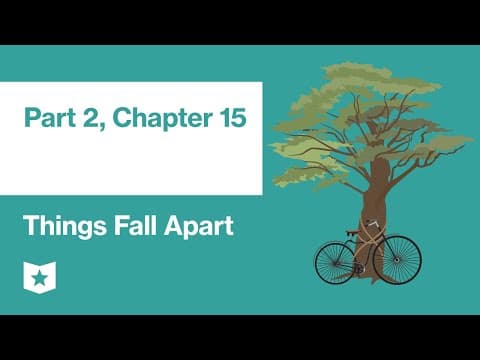
In Chapter 15 of Chinua Achebe's Things Fall Apart, the arrival of white men in the Igbo community marks a significant turning point, symbolized by the metaphor of locusts. The chapter explores themes of friendship, fear, and the impending cultural destruction brought by colonialism, as Okonkwo and Oba Rica confront the realities of their changing world.
In Part 2, Chapter 15 of Chinua Achebe's seminal work, Things Fall Apart, we witness a pivotal moment in the narrative as the protagonist Okonkwo receives a visit from his friend Oba Rica during his second year of exile. This chapter not only deepens the exploration of friendship but also introduces the ominous presence of colonialism that threatens to disrupt the Igbo way of life.
Oba Rica's visit serves as a catalyst for discussing the changes occurring in their society. The two men reflect on the past, with Chen do lamenting how men of his generation had friends across distant clans, contrasting sharply with the current generation's fear of their immediate neighbors. This sentiment highlights a growing isolation within the community, exacerbated by the looming threat of external forces.
Oba Rica shares alarming news about the album a clan, which has been devastated by the arrival of a white man. This stranger, described as not an albino but riding an "Iron Horse"—a bicycle—has sparked fear among the clansmen. The Oracle's prophecy warns that this man would bring destruction, likening the impending arrival of more white men to a swarm of locusts.
The narrative takes a dark turn when Oba Rica recounts how clan members killed the white man and tied his bicycle to a tree. However, this act of defiance leads to dire consequences. The white men returned with reinforcements, resulting in a massacre at the market in a bemay, where they shot indiscriminately. Chen do's remark that "never kill a man who says nothing" underscores the futility of violence against an incomprehensible force.
Okonkwo's reaction to these events reveals his understanding of the need for preparedness. He expresses frustration that the clan should have armed themselves against such threats, indicating a shift in his character as he grapples with the reality of their situation. Oba Rica, on the other hand, voices his fears about the white men, having heard stories of their brutality and the enslavement of villagers.
Achebe's use of locusts as a metaphor is particularly poignant. Earlier in the novel, the arrival of actual locusts brought joy to the community, symbolizing abundance and the cyclical nature of life. However, in this chapter, locusts take on a more sinister meaning, foreshadowing the destructive impact of colonialism. The Oracle's warning about the white men as locusts suggests that their arrival will lead to the devastation of the Igbo culture and way of life.
This metaphor also evokes biblical imagery, reminiscent of the ten plagues of Egypt, where locusts were a sign of impending doom. The juxtaposition of the joyful arrival of locusts with the destructive nature of the white men highlights the paradox of colonialism—while it may bring certain advancements, it simultaneously erodes indigenous cultures and identities.
Amidst the chaos and fear, the chapter also emphasizes the genuine friendship between Oba Rica and Okonkwo. Their relationship is characterized by mutual respect and support, with Oba Rica managing Okonkwo's affairs during his exile. This bond serves as a reminder of the importance of community and solidarity in times of crisis.
As the chapter concludes, Okonkwo's subtle display of emotion reflects the weight of the changes occurring around him. The friendship between the two men stands in stark contrast to the fear and division that colonialism threatens to instigate within their society.
Chapter 15 of Things Fall Apart marks a significant turning point in the narrative, encapsulating the themes of friendship, fear, and the impending cultural destruction brought by colonialism. Through the metaphor of locusts, Achebe poignantly illustrates the duality of change—while it can bring progress, it often comes at a devastating cost. As Okonkwo and Oba Rica confront the realities of their changing world, the reader is left to ponder the profound implications of these transformations on the Igbo culture and identity.