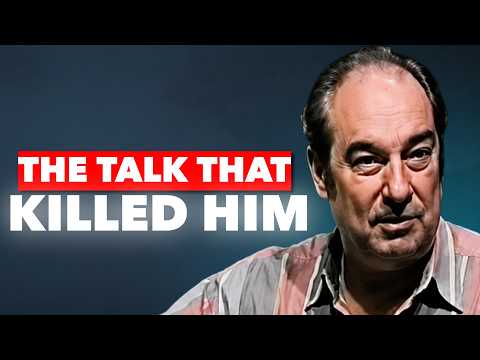
Robert Hansen, an FBI agent, betrayed his country for 22 years, leaking classified information to the Soviet Union and later Russia. His troubled childhood, abusive father, and deep-seated anger drove him to espionage, leading to the deaths of American assets and significant national security breaches. Hansen's story is a cautionary tale of personal demons and the consequences of betrayal.
In 1986, the FBI faced a crisis when two of their critical Soviet assets, KGB agents Valeri Martinov and Sergey Motorin, were compromised and executed after being lured back to Moscow. This alarming event prompted the FBI to turn to its Soviet analytical unit, led by 44-year-old Robert Hansen, to uncover the mole within their ranks. Unbeknownst to them, the mole they were hunting was Hansen himself.
Hansen's espionage activities were characterized by old-fashioned spying techniques. He would leave his home in Vienna, Virginia, and drive to a nearby park, Foxstone Park, where he would drop off plastic garbage bags containing top-secret documents or floppy disks. He used a signaling system involving tape on a signpost to communicate with KGB agents, who would collect the files and leave payment in return. For 22 years, Hansen spied for the Soviet Union and later Russia, handing over 6,000 pages of classified documents and endangering the lives of American assets in exchange for approximately $600,000 in cash and diamonds.
Hansen's motivations can be traced back to his troubled childhood. His father, a police officer, was physically and emotionally abusive, often subjecting Hansen to humiliating and painful experiences. This abusive upbringing instilled in him a deep-seated anger and a desire to prove his worth, particularly to his wife, Bonnie. Despite his outward success, Hansen's childhood left him with profound insecurities.
After studying accounting and earning an MBA from Northwestern University, Hansen joined the Chicago Police Department in 1972, later transitioning to the FBI in 1976. He worked in various roles, including white-collar crime and counterintelligence. In 1979, he began spying for the Soviets, initially walking into the Manhattan office of a Soviet trading agency to offer his services. His first major betrayal was revealing the identity of Dimitri Polyakov, a vital U.S. asset within the GRU, who was later arrested and executed.
Hansen's espionage escalated as he gained access to sensitive information. He worked on developing surveillance tools and became an expert on polygraphs, which ironically helped him evade detection. By 1983, he was a supervisory special agent in the FBI's Soviet analytical unit, where he studied KGB and GRU activities. His access to debriefings of double agents like Martinov and Motorin allowed him to expose their identities, leading to their execution.
In a letter to the KGB, Hansen confirmed the recruitment of these agents, further solidifying his role as a mole. His actions not only compromised U.S. intelligence operations but also led to the deaths of individuals who had trusted the American government.
Despite his treachery, Hansen was a devout Catholic, attending church regularly and even confessing his espionage activities to a priest. This contradiction highlights the complexity of his character; by day, he worked to protect America, while by night, he betrayed it. His most notorious act was revealing the existence of a secret FBI and NSA operation that involved a tunnel built beneath the Soviet Embassy in Washington, rendering the expensive operation useless.
After the collapse of the Soviet Union in 1991, Hansen's behavior became increasingly erratic. He faced allegations of physical assault and inappropriate conduct at work but remained undetected as a mole. The arrest of CIA officer Aldrich Ames in 1994 raised suspicions of another mole within the FBI, leading to an extensive investigation.
In 2000, the FBI finally focused on Hansen, using a retired KGB officer's information to build their case. They devised an elaborate trap, promoting Hansen to a senior executive position while secretly monitoring his activities. On February 18, 2001, Hansen was caught in the act of dropping off classified materials at Foxstone Park and was arrested.
On July 6, 2001, Hansen pled guilty to 15 counts of espionage. In court, he expressed remorse for his actions, acknowledging the pain he caused his family. His betrayal extended beyond national security; he also betrayed his wife in deeply personal ways, including encouraging a friend to secretly watch them and plotting to drug her.
Hansen was sentenced to life in a supermax prison in Colorado, where he remained until his death from colon cancer on June 5, 2023, at the age of 79.
Hansen's motivations for his betrayal are complex. According to Dr. David Charney, a psychiatrist who evaluated him, Hansen's actions stemmed from a desire to prove his worth and deep-seated anger towards his father. This anger manifested in his espionage activities, reflecting a troubled relationship that shaped his life.
Robert Hansen's story serves as a cautionary tale about the profound impact of personal relationships and unresolved issues. His life illustrates how deep-seated anger and a desire for validation can lead to devastating consequences, not only for the individual but also for countless others. If you or someone you know is struggling with similar issues, seeking therapy can be a vital step towards healing and understanding.