In Chapter 7 of Chinua Achebe's Things Fall Apart, the dynamics of masculinity, influence, and betrayal unfold as Okonkwo grapples with his fears of weakness, leading to tragic consequences for his adopted son, Ikemefuna. The chapter explores themes of colonialism, familial relationships, and the harsh realities of traditional gender roles.
In Part 1, Chapter 7 of Chinua Achebe's seminal work, Things Fall Apart, we witness the evolution of relationships within Okonkwo's household and the tragic consequences of rigid masculinity. Three years have passed since the introduction of Ikemefuna, who has become like an older brother to Nwoye. This chapter delves into the themes of influence, masculinity, and the impending tragedy that looms over the characters.
Ikemefuna's presence has positively impacted Nwoye, who is now striving to prove himself as a capable young man. Okonkwo, pleased with this development, believes that Ikemefuna's influence will help mold Nwoye into a tough individual, fit to rule his father's household. Nwoye's growing resentment towards women is evident when he grumbles about chores, reflecting the traditional expectations placed upon him by his father. Okonkwo's pride in Nwoye's attitude underscores the toxic masculinity that permeates their society, where a male clan member is not considered a true man unless he exerts control over women and children.
As Okonkwo shares violent and bloody tales with the boys, Nwoye finds solace in his mother's stories, which carry moral lessons. Despite his preference, Nwoye stays with his father to gain his approval, highlighting the conflict between personal identity and societal expectations. This dynamic illustrates the struggle many young men face in reconciling their true selves with the roles imposed upon them by patriarchal structures.
The chapter takes a pivotal turn with the arrival of locusts, which are considered a delicacy in the community. Their descent is described as a shadow falling over the world, symbolizing the darker forces of European colonialism that are beginning to encroach upon their lives. The joy of the community in consuming the locusts contrasts sharply with the ominous metaphor of darkness, foreshadowing the impending changes that will disrupt their way of life.
As the boys enjoy the locusts, an old warrior visits Okonkwo and informs him that the oracle has decreed the death of Ikemefuna. This news brings a sense of unease, particularly for Ikemefuna, who views Okonkwo as a father figure. Despite the bond they share, Okonkwo's fear of being perceived as weak compels him to participate in the boy's death. This moment encapsulates the tragic conflict between personal affection and societal expectations.
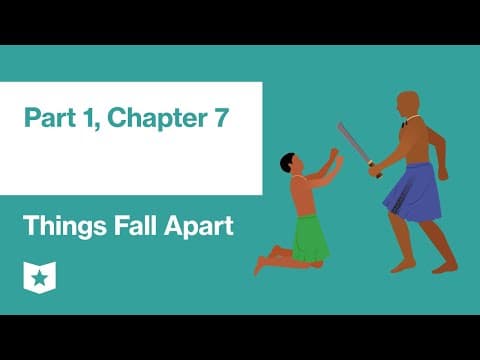
When the moment of execution arrives, Ikemefuna calls out to Okonkwo, seeking comfort and reassurance. However, Okonkwo, driven by his fear of weakness, strikes the final blow, an act that signifies his ultimate betrayal of the boy he has come to care for. This act of violence not only marks a turning point in the narrative but also reveals the depths of Okonkwo's internal struggle. His excessive concern with how others perceive him overrides his paternal instincts, leading to devastating consequences.
Upon returning home, the weight of Ikemefuna's death hangs heavily over Nwoye, who is devastated by the loss. He recalls a haunting memory of the evil forest, where twins were abandoned to die, symbolizing the harsh realities of their culture. This moment of reflection signifies a shift within Nwoye, as he grapples with the implications of his father's actions and the societal norms that dictate their lives.
Chapter 7 of Things Fall Apart serves as a poignant exploration of the complexities of masculinity, influence, and betrayal. Okonkwo's tragic adherence to traditional gender roles ultimately leads to the loss of his adopted son, revealing the destructive nature of societal expectations. As the chapter closes on an ominous note, it hints at the deeper changes that are yet to come, both for Nwoye and the community as a whole. Achebe's narrative invites readers to reflect on the consequences of rigid masculinity and the fragility of familial bonds in the face of cultural pressures.