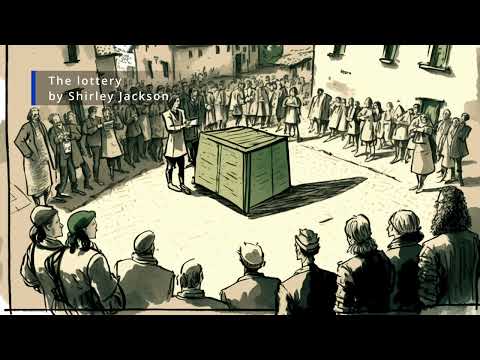
Shirley Jackson's 'The Lottery' presents a chilling narrative about a small village's annual lottery, revealing the dark side of tradition and human nature. The story unfolds on a sunny June day, where villagers gather for a ritual that culminates in a shocking and violent conclusion, challenging readers to reflect on the implications of conformity and societal norms.
Shirley Jackson's short story "The Lottery" is a powerful commentary on the nature of tradition and the human capacity for violence. Set in a seemingly idyllic village, the story unfolds on a clear and sunny morning in June, where the townspeople gather for an annual event that takes a dark turn. This blog post explores the key elements of the story, its themes, and the societal implications it raises.
The story begins on the morning of June 27th, described as clear and sunny, with flowers in bloom and lush green grass. The villagers, numbering around 300, gather in the square between the post office and the bank. Unlike larger towns where the lottery might take two days, this village completes the event in under two hours, allowing everyone to return home for lunch.
Children are the first to arrive, their excitement palpable as they play together. However, there is an underlying tension as they begin to collect stones, led by Bobby Martin, who fills his pockets with smooth, round stones. The adults soon join, engaging in quiet conversations about mundane topics like farming and taxes, while the women gossip and call their children to them.
The lottery is organized by Mr. Summers, a jovial man who oversees various civic activities. He arrives carrying a black wooden box, which has become a symbol of the lottery's grim tradition. The box is old and worn, having been used for generations, and its history is intertwined with the village's past. Despite Mr. Summers' suggestions to create a new box, the villagers resist change, clinging to the old ways.
The black box, now splintered and faded, represents the villagers' reluctance to abandon tradition. It contains slips of paper that have replaced the original wooden chips used in earlier lotteries. The villagers have forgotten much of the ritual's significance, yet they continue to participate without question.
As the lottery commences, Mr. Summers calls the heads of families to draw slips from the box. The atmosphere is tense, with villagers nervously awaiting their turn. The process is mechanical, with little thought given to the implications of the event. When Bill Hutchinson's family is selected, the mood shifts dramatically.
Tessie Hutchinson, Bill's wife, protests that the drawing was unfair, claiming that her husband did not have enough time to choose a slip. However, the villagers dismiss her concerns, and the lottery continues. The tension escalates as it becomes clear that the lottery's outcome is not a prize but a death sentence.
As the villagers prepare for the final act of the lottery, they gather stones, a chilling reminder of the violence that is about to unfold. Tessie Hutchinson finds herself in the center of a cleared space, desperately pleading for mercy. The crowd, once her neighbors, turns into a mob, and the story culminates in a brutal act of violence as they stone her to death.
Jackson's story raises critical questions about the nature of tradition and conformity. The villagers blindly follow the lottery's ritual without questioning its morality or purpose. This reflects a broader commentary on how societies can perpetuate harmful practices simply because they are traditional.
The chilling conclusion of the story highlights the potential for violence that exists within ordinary people. The transformation of the villagers from a community into a mob illustrates how quickly societal norms can shift, leading to dehumanization and brutality.
Shirley Jackson's "The Lottery" serves as a powerful reminder of the dangers of unexamined traditions and the human propensity for violence. Through the lens of a seemingly innocent village lottery, Jackson challenges readers to reflect on their own societal norms and the potential consequences of conformity. The story remains relevant today, prompting discussions about morality, tradition, and the darker aspects of human nature.