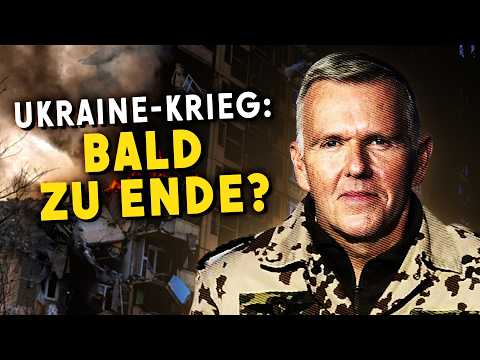
In an interview with General Erich Vad, the discussion revolves around the current state of the Ukraine conflict, the implications for NATO and Europe, and the importance of diplomacy over military escalation. Vad emphasizes the need for dialogue with Russia, the risks of a European war, and the necessity for Germany to reassess its military readiness and foreign policy.
In a recent interview, former Brigade General Erich Vad shared his insights on the escalating conflict in Ukraine and its implications for Europe and NATO. Vad, a renowned security expert and former military advisor, emphasizes the importance of dialogue and diplomacy in preventing further escalation.
General Vad begins by addressing the heightened war rhetoric in German politics and the widespread fear among citizens regarding the conflict with Russia. He notes that despite the dire situation, there is a glimmer of hope due to the new American administration's approach, which seems to favor de-escalation rather than escalation.
Vad points out that the military situation for Ukraine has been challenging for months, with little prospect for a military solution. He highlights the ongoing territorial gains by Russian forces in the Donbass region, which could be strategically significant for future negotiations.
Vad stresses that even if the West views Putin as the embodiment of evil, dialogue is essential. He argues that failing to engage in discussions could lead to disastrous outcomes for Germany and Europe. He believes that history has shown the importance of learning from past mistakes and that a lack of communication could lead to catastrophic consequences.
Vad criticizes the West's approach of supplying weapons without parallel diplomatic efforts. He cites examples of leaders like Erdogan and Modi, who have maintained communication with Putin, contrasting this with the West's reluctance to engage in meaningful dialogue. He argues that a lack of strategic political dialogue has exacerbated the conflict.
As a former military leader, Vad expresses concern about Germany's military readiness. He notes that the Bundeswehr has been underfunded for decades, which has left it ill-prepared for potential conflicts. He emphasizes the need for Germany to reassess its defense strategy and military capabilities in light of the current geopolitical landscape.
The discussion also touches on the potential reintroduction of military conscription in Germany. Vad acknowledges the need for a capable military force but cautions against hasty decisions without considering the implications of such a move.
Vad warns that the current tensions could lead to a European war, particularly if miscalculations occur. He emphasizes that while the risk of a nuclear conflict is low, it is not negligible. He advocates for a balanced approach that combines military readiness with diplomatic efforts to prevent escalation.
Vad argues that any military strategy must be embedded within a broader political framework. He criticizes the lack of a coherent strategy regarding NATO's military presence in Europe and calls for a more nuanced approach that considers the unique geopolitical challenges facing Germany.
In conclusion, General Vad calls for a renewed commitment to diplomacy and dialogue as the primary means of resolving the conflict in Ukraine. He urges citizens to remain informed and engaged in discussions about their country's foreign policy, emphasizing that peace is a collective responsibility. Vad's insights serve as a reminder of the delicate balance between military preparedness and the necessity of dialogue in the pursuit of lasting peace.