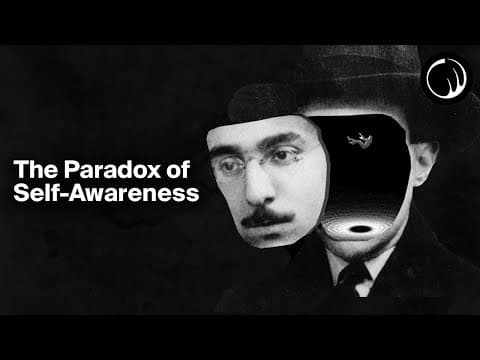
Fernando Pessoa's life and work, particularly The Book of Disquiet, reveal profound insights into self-awareness, the nature of existence, and the paradoxes of life. Despite dying in obscurity, Pessoa's reflections on reality, identity, and the futility of action resonate deeply, making his posthumous recognition a fascinating narrative of artistic legacy.
Sometimes the story behind a work of art is just as fascinating as the work itself. The life of twentieth-century writer Fernando Pessoa and his masterwork, The Book of Disquiet, exemplifies this notion. The origins of this literary gem are intertwined with Pessoa's own experiences, creating a narrative that feels almost fictional.
Fernando Pessoa was born in 1888 in Lisbon, Portugal. His early life was marked by tragedy; at just five years old, he faced the loss of his father to tuberculosis, followed by the death of his younger brother the next year. This exposure to loss and impermanence shaped his worldview. Shortly after, his mother remarried, and the family relocated to South Africa, stripping Pessoa of the familiar landscapes of his childhood.
While in South Africa, Pessoa became fluent in English and developed a deep appreciation for English literature. At seventeen, he returned to Lisbon, where he would spend the rest of his life, dedicating himself to writing. However, despite his literary aspirations, he published only a few books during his lifetime, which went largely unnoticed. Pessoa died in 1935 at the age of forty-seven, seemingly aware of his potential greatness, a sentiment that would eerily prove prophetic.
After Pessoa's death, his manuscript for The Book of Disquiet, along with tens of thousands of other pages, remained hidden in a wooden trunk. It wasn't until 1982, exactly forty-seven years after his death, that this remarkable work was discovered and published. Today, it is regarded as one of the most unique and significant literary works of the twentieth century.
The Book of Disquiet is a collection of fragmented vignettes that reflect Pessoa's lifetime of thoughts and musings. The themes explored within the book include reality versus dreaming, the absurdity of existence, and the complexities of selfhood. The structure of the book is non-linear, allowing readers to experience it in various ways, whether read forwards or backwards.
Interestingly, Pessoa does not claim authorship of the work. Instead, it is attributed to a fictional character named Bernardo Soares, an assistant bookkeeper from Lisbon, along with another character, Vicente Guedes. These characters are not merely pseudonyms; they are distinct personas with their own writing styles, perspectives, and backstories. Pessoa referred to these literary creations as heteronyms, and he created around eighty of them throughout his life.
This unique approach leads to the classification of The Book of Disquiet as an autobiography of sorts, albeit one that is factless and written by someone who never existed. The fragmented nature of the text mirrors the philosophical themes of the work, particularly the illusory and fragmented nature of the self.
Throughout The Book of Disquiet, Pessoa poignantly articulates the alienation and disorientation that accompany self-awareness. He expresses a profound sense of confusion regarding his own identity, stating:
"I don't know how to feel or think or love. I'm a character in a novel as yet unwritten..."
This metaphor of being a character in an unwritten novel encapsulates Pessoa's struggle with self-understanding. He suggests that the pursuit of self-awareness is akin to a free-fall into an abyss, where the landing is fatal. The inability to communicate one's internal experiences while navigating this freefall contributes to a lifetime of disquiet.
Pessoa frequently grapples with themes of tedium, futility, and meaninglessness. He perceives life as a series of dreams, asserting:
"I've never done anything but dream. This, and this alone, has been the meaning of my life."
For Pessoa, the act of doing or achieving holds little significance. He views reality as a delusion, akin to dreams that dissolve upon waking. This perspective reinforces the notion that life is ultimately ephemeral and often forgotten.
The contradictions within Pessoa's work are striking. He writes about the futility of action while simultaneously engaging in the act of writing. This paradox may not indicate incoherence but rather reflects Pessoa's belief in the utility of paradox itself. Just as certain medical treatments expose individuals to the very ailments they aim to prevent, engaging with literature and art may provide a form of immunity against the existential dilemmas of life.
Notably, The Book of Disquiet remains unfinished, mirroring Pessoa's philosophical views on existence. The manuscript, trapped in a trunk and only recognized posthumously, serves as a metaphor for the human condition. The book's fragmented nature and the fact that it was completed by time rather than intention highlight the complexities of identity and existence.
Perhaps the most intriguing aspect of The Book of Disquiet is its prophetic passages. Pessoa foresaw a future where his work would be read and appreciated, despite his contemporaries' indifference. He wrote:
"It sometimes occurs to me... that if one day... the sentences I write are read and admired... I’ll have already died long ago."
This foresight has indeed come to fruition, as Pessoa's work is celebrated today, raising questions about the nature of artistic legacy and the relationship between creator and creation.
The story of The Book of Disquiet transcends mere literary analysis; it embodies a mystical quality that resonates with readers on a profound level. It serves as a manual for nihilists and a source of comfort for those grappling with the absurdities of life. Pessoa's reflections remind us not to take ourselves or life too seriously, suggesting that sometimes, exposure to the ailment is part of the treatment. In exploring the paradoxes of self-awareness and existence, Pessoa's work continues to captivate and challenge readers, inviting them to ponder the complexities of their own lives.