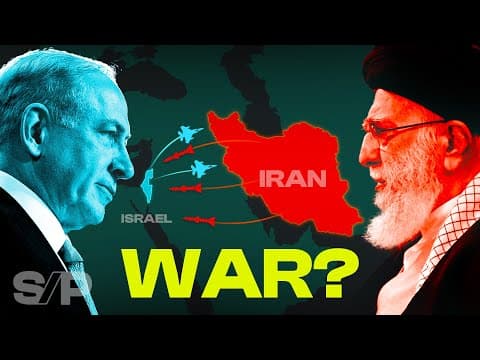
The ongoing rivalry between Israel and Iran has escalated to unprecedented levels, with recent missile attacks and military responses marking a significant shift towards direct conflict. Historical alliances, military strategies, and the influence of regional militias have shaped this complex relationship, raising concerns about the potential for a wider war.
The rivalry between Israel and Iran has reached a critical juncture, with recent military actions signaling a potential shift towards all-out war. On October 1, 2024, Iran launched approximately 180 ballistic missiles at Israel, marking a significant escalation in hostilities. While Israel managed to intercept most of these missiles, the attack has prompted a series of retaliatory strikes and raised questions about the future of this fraught relationship.
Interestingly, Israel and Iran were once allies. In the 1970s, during a time when Israel faced hostility from neighboring Arab states, it sought partnerships with non-Arab nations, including Iran. Under the rule of Shah Mohammad Reza Pahlavi, Iran was a modern, oil-rich nation that collaborated with Israel, providing oil and military support against common adversaries.
This alliance came to an abrupt end in 1979 with the Iranian Revolution, which established an Islamist regime that vehemently opposed Israel. The new Iranian leadership condemned Israel's control over Palestinian territories and positioned itself as a champion of the Palestinian cause. Over the decades, while many Arab states moved towards peace with Israel, Iran remained steadfast in its opposition, viewing itself as the primary adversary of Israel in the region.
Both nations have developed sophisticated military strategies to deter each other from engaging in direct conflict. Israel has built one of the world's most effective intelligence agencies, Mossad, which monitors Iranian activities closely. Additionally, Israel benefits from advanced military technology, largely due to its alliance with the United States, allowing it to strike first and defend against Iranian retaliation.
Conversely, Iran has developed its own deterrent capabilities, including a vast arsenal of ballistic missiles, a controversial nuclear program, and support for militant groups like Hamas and Hezbollah. These militias serve as proxies for Iran, enabling it to challenge Israel without direct confrontation.
The delicate balance of deterrence began to falter following a surprise attack by Hamas, which launched thousands of rockets into Israel. This unprecedented assault exposed vulnerabilities in Israel's intelligence and military response, prompting a shift in the regional power dynamics. Iran, which had previously been cautious about entering a direct conflict with Israel, found itself at a crossroads: to fulfill its promise of support to Palestinian groups or to prioritize its own survival.
As Israel retaliated against Hamas and Iranian-backed militias, the situation escalated further. Iran's response included launching missiles at Israel, but these were largely intercepted, leading to a perception of diminishing Iranian deterrence. Israel's confidence grew, prompting it to conduct strikes on Iranian military targets, including operations within Iranian territory.
The ongoing conflict in Palestine remains a critical factor in the Israel-Iran rivalry. It serves as a catalyst for tensions, with Iran using its support for militant groups to challenge Israel's security. Experts suggest that any resolution to the Israel-Iran conflict must begin with a ceasefire in Gaza, which could pave the way for broader regional stability.
The current trajectory of the Israel-Iran rivalry poses significant risks for the region and beyond. As both nations continue to engage in military posturing and retaliatory strikes, the potential for a larger conflict looms. Understanding the historical context and the complex interplay of military strategies is essential for grasping the implications of this escalating situation. The key to preventing further escalation lies in addressing the underlying conflicts that fuel this rivalry, particularly the ongoing tensions in Palestine.