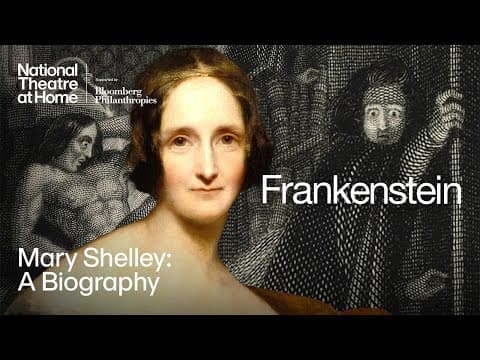
Mary Shelley, born to a unique family background, wrote Frankenstein during a tumultuous period in history. Her experiences, relationships, and the socio-political climate of the early 19th century significantly influenced her writing, leading to the creation of a novel that challenged societal norms and explored themes of creation and existence.
Mary Shelley was the product of an extraordinary background. Her father, William Godwin, was an atheist, a controversial stance during the late 18th and early 19th centuries. Her mother, Mary Wollstonecraft, was a pioneering feminist, often regarded as the progenitor of feminist thought. Given this unique lineage, it is no surprise that Mary Shelley would lead an extraordinary life and produce remarkable work.
In 1816, Britain was grappling with the aftermath of war. The demobilization of the army and the cessation of munitions production created significant economic challenges. The country was transitioning from an agricultural economy to an industrial one, leading to widespread industrial unrest. This period marked a detachment from the natural world, driven by the Industrial Revolution, which served as a backdrop for Mary Shelley's writing.
The dynamic interplay between the industrial and scientific advancements and the romantic ideals of the time created a fertile ground for Mary Shelley's creativity. This intersection is vividly illustrated in her seminal work, Frankenstein.
Mary's relationship with Percy Bysshe Shelley was pivotal in her life. Percy, often viewed as a controversial figure, was suspected of incest and had a reputation for scandalous behavior. Meeting him was liberating for Mary, marking a significant turning point in her life and her separation from her family, particularly her father.
Mary Shelley’s journey to Geneva in 1816 was influenced by her complicated family dynamics. She grew up alongside her stepsister, Claire Clairmont. After eloping with Percy in 1814, they took Claire with them, leading to a tense love triangle. Claire eventually sought the affections of Lord Byron, the most famous poet of the time, prompting the trio to follow him to Europe.
The group settled at the Villa Diodati on the shores of Lake Geneva, a location steeped in literary history, having been visited by Milton. This setting became a creative commune where the famous events of that summer unfolded. Byron, a magnetic figure, inspired those around him, leading to a challenge for everyone to write a ghost story. This suggestion sparked a panic in Mary, who struggled to conceive her own story.
In a moment of inspiration described as a "waking dream," Mary envisioned the story that would become Frankenstein. The atmosphere was charged with tension, as Europe faced one of its worst summers, with thunderstorms echoing around the lake. This dramatic backdrop contributed to the frenzied state in which Mary and her companions found themselves, ultimately leading to the birth of her novel.
After leaving Geneva and returning to Bath, Mary began writing Frankenstein in earnest. During this time, she faced personal tragedies, including the loss of her mother and a child. These experiences deeply influenced her writing, allowing her to explore themes of creation and existence through the lens of her own suffering and loss.
Frankenstein suggests that creation need not be divinely inspired, a shocking notion for the time. The novel, published anonymously in 1818, challenged societal norms and religious beliefs, akin to slapping the Archbishop of Canterbury in the face. Mary was only 18 or 19 when she wrote it, a fact that adds to the novel's raw and exploratory quality.
The authorship of Frankenstein gradually became known, and it was reissued in 1831 with a preface that reflected Mary’s growth and the passage of time since its initial publication. By this point, it was crucial for Mary to rehabilitate her reputation to support herself and her child. While her authorship of Frankenstein allowed her to build a literary career, it also meant she could never fully escape the shadow of her most famous work.
Mary Shelley’s life and her creation of Frankenstein remain a testament to the power of personal experience and the socio-political climate in shaping literature. Her story is one of resilience, creativity, and the exploration of profound themes that continue to resonate today.