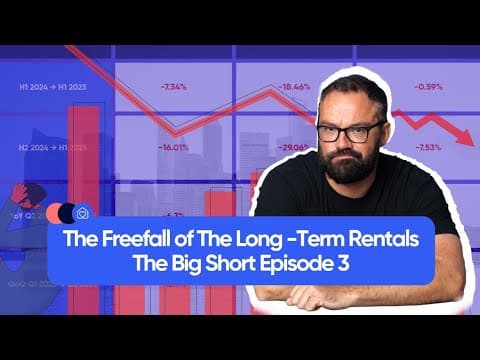
The rental market in Dubai is experiencing a significant downturn, with transaction volumes for villas and long-term rentals dropping sharply. Reports indicate a potential 15% price decline by the end of 2025, driven by oversupply and decreasing demand. The job market's cooling further exacerbates the situation, leading to increased defaults on rental payments. Government initiatives aim to stimulate the market, but the outlook remains challenging as the number of new units continues to rise.
The real estate market in Dubai is undergoing a significant transformation, with alarming trends emerging in the long-term rental sector. This blog post delves into the current state of the rental market, supported by data from various reports, and discusses the implications for landlords, tenants, and investors.
Recent reports indicate a drastic decline in the rental market, particularly for villas, which have traditionally been viewed as highly desirable properties in Dubai. According to Espace, a leading real estate company, the transactional volume for villas in the top communities has plummeted:
These figures reflect a broader trend of decreasing demand for rental properties, suggesting that many potential tenants are either not moving to Dubai or are opting for different housing arrangements.
The Allsopp & Allsopp report highlights a staggering 28% decrease in lettings for H1 2025 compared to H2 2024, with a similar 27% drop in rentals year-on-year. This decline is attributed to an oversupply of rental units, with 81,672 new units launched but only 16,744 handed over, resulting in a ratio of nearly 5:1 for units launched versus completed.
The imbalance between supply and demand is evident, with a projected 350,000 to 400,000 new units expected to enter the market over the next 30-40 months. This influx of supply, coupled with declining transaction volumes, is likely to lead to further price reductions as landlords attempt to attract tenants.
The Espace report also reveals that new property listings have surged by 159%, while price reductions have increased by 147% compared to the previous year. The average sales price has decreased by 3%, indicating a downward trend in property values. This situation is compounded by the fact that many landlords are struggling to find long-term tenants, leading to increased vacancies and financial strain.
The AirDXB Q2 2025 report underscores the increasing pressure on Dubai's long-term rental sector. Key findings include:
These consistent negative trends suggest that the rental market is facing significant challenges, with landlords increasingly unable to secure tenants for their properties.
The job market in Dubai is also showing signs of cooling, which could further exacerbate the rental crisis. According to recent data, job applications have surged, with up to 2000 applications per role compared to just 100 a few years ago. This increased competition for jobs is leading to higher unemployment rates and, consequently, more defaults on rental payments.
Fitch Ratings has projected a potential 15% drop in property prices by the end of 2025, driven by the current economic climate and the oversupply of housing. This forecast aligns with the trends observed in the rental market, where declining demand is leading to lower prices and reduced returns for investors.
In response to the challenging market conditions, the Dubai government has introduced several initiatives aimed at stimulating demand:
While these initiatives are promising, their effectiveness in reversing the current downward trend remains to be seen.
The long-term rental market in Dubai is in a state of freefall, with significant declines in transaction volumes and rental prices. The combination of oversupply, a cooling job market, and increasing defaults on rental payments paints a challenging picture for landlords and investors alike. As the market continues to evolve, it will be crucial for stakeholders to stay informed and adapt to the changing landscape. The upcoming months will be critical in determining the future trajectory of Dubai's real estate market, particularly as we approach Q4 2025, which may reveal more definitive trends and data.