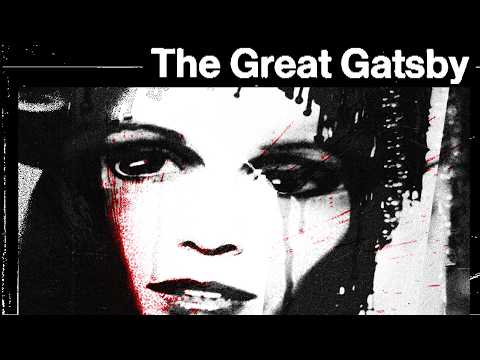
F. Scott Fitzgerald's The Great Gatsby serves as a profound critique of the American Dream, illustrating its decay through the lives of its characters, particularly Jay Gatsby and Daisy Buchanan. The novel reveals how materialism and social class distort the ideal of upward mobility, ultimately leading to disillusionment and tragedy.
F. Scott Fitzgerald's novel The Great Gatsby is often regarded as a profound critique of the American Dream, dissecting its ideals and exposing the harsh realities of American society in the 1920s. Through the lives of its characters, Fitzgerald illustrates how the pursuit of wealth and status can lead to moral decay and disillusionment.
The term "American Dream" was coined in the early 1930s, but the narrative it represents has existed for centuries. It embodies the belief that anyone, regardless of their background, can achieve success and prosperity through hard work and determination. However, Fitzgerald's portrayal of this dream in The Great Gatsby suggests that it has been corrupted by materialism and social stratification.
Fitzgerald wrote The Great Gatsby during a time of economic upheaval in America. The early 1920s saw a dramatic shift from post-war depression to a booming economy, with unemployment dropping and the nation's GDP soaring. Despite this apparent prosperity, Fitzgerald and his contemporaries sensed an underlying danger, as articulated by Oswald Spengler in his work The Decline of the West. Spengler's ideas about the decay of Western civilization resonated with Fitzgerald, influencing his depiction of the American Dream as a hollow facade.
The novel follows Jay Gatsby, born James Gatz, who rises from humble beginnings to immense wealth through dubious means, including bootlegging. Gatsby's pursuit of the American Dream is intricately tied to his obsession with Daisy Buchanan, a symbol of the life he yearns for. However, Gatsby's wealth is portrayed as superficial, as it is built on the exploitation of the lower classes, represented by the numerous servants who maintain his extravagant lifestyle.
Gatsby's lavish parties, filled with guests who barely know him, serve as a metaphor for the emptiness of the American Dream. His opulence is a mask that conceals his true self, and his relentless pursuit of Daisy ultimately reveals the illusion of his aspirations.
Daisy Buchanan embodies the allure and emptiness of wealth. Initially portrayed as a charming and beautiful woman, Daisy's character reveals a deeper moral paralysis caused by her privileged upbringing. Her marriage to Tom Buchanan, a wealthy and brutish man, reflects her entrapment in a world defined by materialism and social status.
Daisy's fleeting affection for Gatsby highlights the transactional nature of their relationship. She is not merely a love interest but a trophy representing Gatsby's success. When faced with the reality of their relationship, Daisy retreats into her life of comfort, leaving Gatsby to grapple with the consequences of his dreams.
Fitzgerald critiques the American Dream through the disillusionment experienced by Gatsby and Daisy. Gatsby's belief that he can recreate the past and win Daisy's love is emblematic of the naive optimism that characterizes the American Dream. However, as the story unfolds, it becomes clear that the dream is unattainable.
The green light at the end of Daisy's dock symbolizes Gatsby's unreachable aspirations. As he draws closer to Daisy, the light loses its significance, revealing the emptiness of his pursuit. This moment encapsulates the central theme of the novel: the American Dream is an illusion, built on false hopes and material desires.
Fitzgerald's portrayal of class distinctions is crucial to understanding the decay of the American Dream. The divide between East Egg (old money) and West Egg (new money) illustrates the entrenched social hierarchies that dictate access to the American Dream. Tom Buchanan, representing old money, embodies the arrogance and entitlement of the elite, while Gatsby, as a self-made man, symbolizes the struggle for acceptance in a society that values lineage over merit.
The Valley of Ashes, a desolate wasteland between the two Eggs, serves as a stark reminder of the human cost of the American Dream. It is inhabited by the poor and marginalized, whose labor fuels the opulence of the wealthy. This setting underscores Fitzgerald's critique of a society that thrives on exploitation and inequality.
The tragic fate of Gatsby and the moral decay of Daisy and Tom culminate in a series of devastating events. Gatsby's death, framed by Tom's manipulation and Daisy's indifference, highlights the ultimate futility of his dreams. The characters' carelessness and lack of accountability reflect Fitzgerald's disdain for the elite, who retreat into their wealth after causing destruction.
The Great Gatsby remains a poignant exploration of the American Dream and its discontents. Fitzgerald's critique of materialism, social class, and the illusion of success resonates with contemporary audiences, serving as a cautionary tale about the dangers of equating wealth with worth. As we reflect on the novel, we are reminded that the true essence of the American Dream should transcend material possessions and strive for a more equitable society that uplifts all individuals, not just the privileged few.