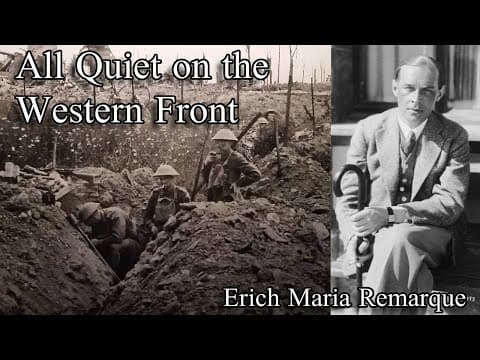
Erich Maria Remarque's 'All Quiet on the Western Front' presents a harrowing depiction of World War I through the eyes of young soldiers, exploring themes of camaraderie, the brutality of war, and the profound impact of trauma on the human spirit. The narrative follows Paul Baumer and his comrades as they navigate the horrors of the front lines, the loss of innocence, and the struggle to find meaning in a world ravaged by conflict.
Erich Maria Remarque's seminal work, "All Quiet on the Western Front," offers a poignant and unflinching portrayal of the experiences of soldiers during World War I. Through the eyes of Paul Baumer, a young soldier, the narrative delves into the physical and psychological toll of war, the bonds formed between comrades, and the stark contrast between the romanticized notions of battle and the grim realities faced by those on the front lines.
The story begins with Paul and his fellow soldiers enjoying a rare moment of respite behind the front lines. They indulge in hearty meals, a stark contrast to the meager rations they typically receive. The camaraderie among the men is palpable as they share food and stories, momentarily forgetting the horrors that await them. However, this fleeting peace is overshadowed by the constant threat of death and injury that looms over them.
As the narrative unfolds, the reader is thrust into the chaos of battle. The soldiers face relentless artillery fire, and the toll of war becomes evident as friends are lost and injuries mount. Paul reflects on the absurdity of their situation, grappling with the senselessness of the conflict and the loss of his youth. The once vibrant dreams of a future are replaced by the grim reality of survival in a world where death is a constant companion.
Throughout the novel, the theme of brotherhood emerges as a crucial element in the soldiers' ability to endure the horrors of war. Paul and his comrades, including Kat, Albert, and Müller, form deep connections that provide solace amidst the chaos. Their shared experiences create a bond that transcends the brutality of their surroundings, offering moments of laughter and humanity in an otherwise dehumanizing environment.
As the war drags on, the psychological impact on the soldiers becomes increasingly apparent. Paul grapples with feelings of alienation and despair, struggling to reconcile his experiences on the front with the expectations of society back home. The narrative poignantly captures the disillusionment felt by a generation that has been irrevocably changed by the war, highlighting the profound scars left on their psyche.
Remarque's narrative is a powerful indictment of the futility of war. The soldiers are portrayed not as heroes, but as victims of a senseless conflict that strips them of their humanity. The novel culminates in a haunting reflection on the loss of life and the enduring impact of trauma, leaving readers to ponder the true cost of war.
In "All Quiet on the Western Front," Erich Maria Remarque masterfully captures the harrowing realities of World War I through the eyes of young soldiers. The novel serves as a poignant reminder of the sacrifices made by those who fought and the lasting scars left on their souls. As Paul Baumer's journey unfolds, readers are left to grapple with the profound questions of life, death, and the search for meaning in a world ravaged by conflict. Remarque's work remains a timeless exploration of the human condition, resonating with audiences long after its publication.