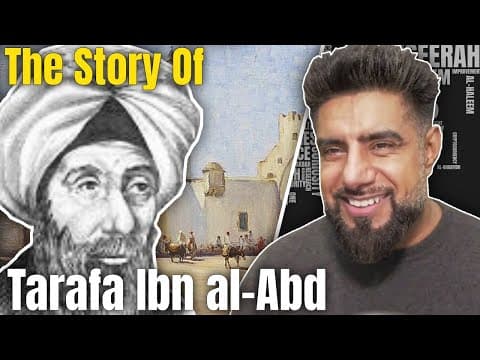
Tarafa Ibn al-Abd, a renowned pre-Islamic poet from the Bakr tribe, is celebrated for his profound wisdom and poetic prowess. His life, marked by family feuds and a tragic end, showcases the power of poetry in ancient Arab culture and the timeless relevance of his insights.
Tarafa Ibn al-Abd was a prominent figure in pre-Islamic Arabia, known for his exceptional poetry and wisdom. Hailing from the Bakr tribe, he lived during a time when poetry was not only an art form but also a means of social commentary and personal expression. This blog post delves into the life, works, and tragic end of Tarafa, highlighting his contributions to Arabic literature and the enduring relevance of his insights.
Tarafa belonged to the Bakr tribe, a significant and warrior-like group known for their fierce reputation and involvement in various conflicts, including the notable Day of the Car against the Sassanid dynasty. The tribe was scattered across the Middle East, and Tarafa's poetry emerged from this rich cultural backdrop.
Tarafa's poetry was highly esteemed, with some of his works being considered among the finest in Arabic literature. His poems were so revered that they were attached to the Kaaba, symbolizing their status as the gold standard of poetry. While some argue that Imru al-Qais holds the title of the greatest pre-Islamic poet, Tarafa is often regarded as a close second, earning him a place in the annals of literary history.
Tarafa's poetry is characterized by its depth and wisdom, often reflecting on love, life, and human experiences. His verses contain proverbs that are still used in Arabic today, showcasing his ability to encapsulate profound truths in simple phrases.
One of Tarafa's famous lines compares the mixing of different things to the confusion of a male camel being mistaken for a female, illustrating the idea of mixing apples and oranges. Another poignant proverb he crafted states that some evils are easier to bear than others, highlighting the complexities of human experience.
Tarafa's poetry often explores themes of love, showcasing his non-monogamous relationships and the wisdom he gained from his experiences. His verses convey a deep understanding of emotional pain, as seen in his reflections on love and loss, which resonate with readers even today.
Despite his literary genius, Tarafa's life was cut short at a young age, reportedly around 26 or 27. His demise was a result of a family feud that escalated due to his sharp tongue and poetic prowess.
Tarafa's conflict with his brother-in-law, Abd al-Amar, exemplifies the volatile nature of familial relationships in his time. After a disagreement, Tarafa composed a scathing poem that went viral, drawing the ire of his brother-in-law, who was connected to the king of al-Hira. This poem not only insulted his brother-in-law but also caught the attention of the king, leading to dire consequences.
The king, feeling insulted by Tarafa's words, plotted his revenge. He invited Tarafa and his uncle, Muthalumis, to the royal court under the guise of friendship. However, unbeknownst to them, the invitation was a trap, as the king had already decided on their execution.
During their visit, the king presented them with a letter purportedly containing a royal gift. However, the letter was actually a death sentence for Tarafa. Muthalumis, sensing danger, urged Tarafa to flee, but the young poet's arrogance led him to dismiss the warning.
Upon arriving in Bahrain, Tarafa learned of the letter's true contents. Despite Muthalumis's pleas to escape, Tarafa insisted on facing his fate. He was ultimately executed, but not before leaving behind a legacy of wisdom and poignant poetry that continues to resonate.
Tarafa Ibn al-Abd's life and poetry reflect the complexities of human emotions and the power of words. His tragic end serves as a reminder of the consequences of pride and the importance of wisdom in navigating relationships. Even in death, Tarafa's insights endure, offering timeless lessons that remain relevant in today's world. His story is a testament to the splendor and strength found in the art of poetry, echoing through the ages.