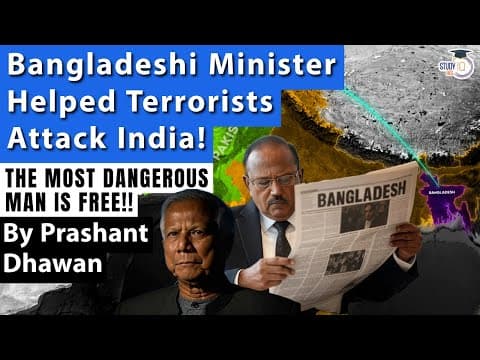
Abdul Salam Pintu, a former Bangladeshi minister involved in funding terrorism against India, has been released from prison, raising concerns about the potential resurgence of radicalism and terrorism in Bangladesh, reminiscent of the country's turbulent past from 2001 to 2006.
In a shocking turn of events, Abdul Salam Pintu, a former Bangladeshi minister known for his involvement in funding terrorist activities against India, has been released from prison. This development has raised alarms regarding the implications for India-Bangladesh relations and the potential resurgence of radicalism in the region.
Abdul Salam Pintu served as the Deputy Minister of Education in Bangladesh from 2001 to 2006, during a period when the Bangladesh National Party (BNP) was in power under Prime Minister Khaleda Zia. His tenure was marked by significant political turmoil and a rise in terrorist activities, particularly against India. Pintu was implicated in funding the Pakistan-based terrorist organization, Harakat-ul-Jihad-al-Islami, which aimed to carry out attacks on Indian soil.
Investigations revealed that Pintu not only provided financial support to terrorist groups but also assisted them in procuring weapons and gathering intelligence. His actions contributed to a series of violent incidents, including grenade attacks on opposition rallies, particularly targeting the Awami League led by Sheikh Hasina. In October 2016, he was convicted and sentenced to 17 years in prison for his crimes.
After serving his sentence, Pintu's release in 2024 has sparked concerns about his potential return to political power. Given his history, there are fears that he could once again assume a ministerial role, which would pose a significant threat to India's security. The possibility of a former minister who funded terrorism being reinstated in a position of power raises serious questions about the current political climate in Bangladesh.
The period from 2001 to 2006 was particularly challenging for India, as Bangladesh became a hub for various terrorist organizations. During this time, there were numerous incidents of violence along the India-Bangladesh border, including the brutal torture and killing of Indian soldiers. Reports from international media highlighted the barbarity of these acts, which were often met with little to no accountability from the Bangladeshi government.
Pintu's release is not just a matter of individual concern; it reflects broader issues within Bangladesh's political landscape. The current government, led by Prime Minister Sheikh Hasina, faces criticism for its handling of political dissent and its relationship with radical elements. The potential for a resurgence of the radicalism seen in the early 2000s is alarming, especially as Bangladesh has been increasingly leaning towards authoritarianism.
India must remain vigilant in securing its borders and addressing the threats posed by radical elements in Bangladesh. The international community should also be alerted to the implications of releasing individuals like Pintu, who have a history of supporting terrorism. It is crucial for India to engage with global partners to counter the spread of terrorism and ensure that such individuals do not regain power.
The release of Abdul Salam Pintu serves as a stark reminder of the fragility of peace in the region. As Bangladesh navigates its political future, the potential for a return to the radicalism of the past looms large. It is imperative for both India and the international community to monitor the situation closely and take proactive measures to prevent the resurgence of terrorism in South Asia. The stakes are high, and the consequences of inaction could be dire for regional stability.