Rudyard Kipling's poem 'Boots' captures the monotony and psychological toll of war through the repetitive imagery of soldiers marching. The poem reflects on the futility of conflict and the mental strain experienced by soldiers, emphasizing the lack of progress and the constant presence of boots as a symbol of their struggle.
Rudyard Kipling's poem "Boots" offers a poignant reflection on the experience of soldiers during wartime. Through its repetitive structure and vivid imagery, the poem encapsulates the monotony and psychological strain faced by those in combat. This analysis delves into the themes and emotions conveyed in the poem, highlighting its significance in understanding the soldier's experience.
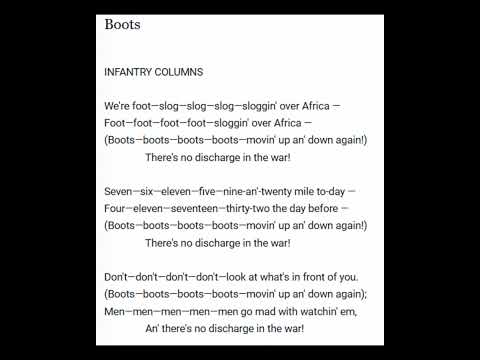
From the very beginning, Kipling establishes a rhythm that mirrors the relentless march of soldiers. The repeated phrase "boots boots boots boot moving up and down again" serves as a powerful motif throughout the poem. This repetition emphasizes the continuous and exhausting nature of military life, where soldiers are caught in a cycle of marching without any real progress or discharge from their duties.
Kipling introduces a stark contrast between the physical act of marching and the mental toll it takes on soldiers. The lines mentioning numbers—"7 6 11 5 9 and 20 mil today 4 11 17 32"—suggest a focus on statistics and casualties, highlighting the grim reality of war. The soldiers are not just individuals; they are reduced to mere numbers, which can lead to a sense of dehumanization.
The poem also explores the psychological impact of war on soldiers. The refrain "there's no discharge in the war" signifies a feeling of entrapment. Soldiers are unable to escape the horrors of their environment, leading to madness as expressed in the line "men go mad with watching him." This line captures the mental strain of constant vigilance and the fear of what lies ahead.
Kipling acknowledges the various ways soldiers cope with their circumstances. The line "try try try try to think of something different" reflects the desperate attempts to escape the grim reality of war. However, the futility of these efforts is evident, as the soldiers are continually reminded of their situation through the omnipresent imagery of boots.
Boots in the poem symbolize not only the soldiers' physical journey but also their emotional and psychological burdens. The constant movement of boots serves as a reminder of the ongoing struggle and the lack of resolution in their plight. The phrase "there's no discharge in the war" reinforces the idea that the soldiers are trapped in a cycle of violence and despair.
Rudyard Kipling's "Boots" is a powerful commentary on the experience of soldiers in war. Through its repetitive structure and vivid imagery, the poem captures the monotony, psychological strain, and dehumanization faced by those in combat. The relentless rhythm of marching boots serves as a haunting reminder of the futility of war and the toll it takes on the human spirit. Kipling's work remains relevant today, as it invites readers to reflect on the sacrifices made by soldiers and the enduring impact of conflict on their lives.