The recent seizure of an Iranian oil tanker by U.S. forces uncovered materials destined for ballistic missile production, exposing China's covert military support to Iran despite public denials. This incident highlights the complexities of international relations, the challenges of trust with rogue nations, and the strategic importance of enforcing strict blockades to curb Iran's nuclear ambitions and China's regional influence.
Recently, American forces seized an Iranian oil tanker, an event that has shed light on the ongoing geopolitical tensions involving Iran, China, and the United States. Initial reports suggested uncertainty about the contents of the vessel, but subsequent updates revealed a bombshell discovery: the tanker was carrying materials used to build ballistic missiles, implicating China in covert military support to Iran.
The tanker, flagged under Iran, was intercepted by the U.S. Navy while en route from China to Iran. This route is significant because it indicates the materials were being shipped east to west, directly from China rather than from Iranian ports. The interception was a part of a broader blockade aimed at restricting Iran's ability to proliferate military technology.
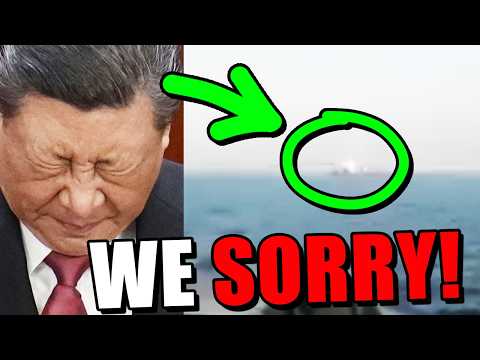
The seizure was documented with footage showing the U.S. Navy ordering the vessel to vacate its engine room under threat of disabling fire, demonstrating the seriousness of the operation.
According to Reuters, the cargo included ammonium perchlorate, sodium perchlorate, sodium chlorate, oxidizers, and propellant chemicals. These substances are classified as dual-use materials, meaning they have legitimate civilian applications but can also be used in the production of ballistic missiles.
This discovery confirms suspicions that China has been covertly supplying Iran with military materials, despite public denials from the Chinese government.
China publicly denied any involvement in sending military aid to Iran. However, the seizure of these materials aboard vessels traveling from China to Iran contradicts these claims, revealing a covert operation to support Iran's ballistic missile program.
The blockade enforced by the Trump administration is not merely economic but has a significant military component. It aims to suffocate Iran's ability to develop nuclear weapons and ballistic missiles by cutting off critical supplies.
China and Iran have criticized this blockade as "economic terrorism," but the evidence suggests it is a necessary measure to prevent the proliferation of dangerous military technology.
The video commentary criticizes the "Obama apologetic approach," which was based on trusting rogue nations like Iran to comply with agreements. The Obama administration's Iran deal is portrayed as naive, given Iran's continued pursuit of nuclear weapons and support for terrorism.
Supporters of Obama argue that his administration successfully removed 97% of enriched uranium from Iran and avoided military casualties and economic disruptions seen later.
Critics argue that Obama's approach failed to prevent Iran's nuclear ambitions and allowed China to increase its influence in the region.
The commentary emphasizes the difficulty of trusting nations like Iran and China, which have repeatedly acted against U.S. interests. The notion that these countries would voluntarily cease their pursuit of nuclear weapons or military dominance is described as naive.
While non-interventionism has ideological appeal, the real-world scenario is far from ideal. Allowing Iran to develop nuclear weapons unchecked is seen as a grave mistake, similar to the situation with North Korea.
China's entry into the World Trade Organization and attempts to normalize relations have not resulted in expected cooperation. Instead, China has been accused of intellectual property theft, espionage, and attempts to undermine U.S. systems.
The blockade and seizure of the tanker are presented as part of a broader strategy by the Trump administration to confront adversaries like Iran and China directly.
The EU is described as "spineless" for refusing to impose similar standards or take a firm stance against Iran and China.
The article argues for the necessity of imposing strict standards and measures against rogue nations. The idea that these countries will act responsibly without enforcement is dismissed as unrealistic.
The seizure of the Iranian oil tanker loaded with missile-building materials underscores the importance of firm and decisive action against rogue states. The commentary suggests that only through strong enforcement, such as the Trump administration's blockade, can the proliferation of nuclear weapons and military threats be curtailed.
It calls for a global realignment that places America in a position of strength and control, enforcing standards that have been neglected by other international actors.
Ultimately, the article advocates for ending the 47 years of hostility with Iran by stopping its militant regime and curbing China's covert military support, potentially resetting global power dynamics in favor of peace and security.
This comprehensive overview reveals the complexities and stakes involved in the recent tanker seizure and the broader geopolitical struggle surrounding Iran's nuclear ambitions and China's role in the region.