Black America faces a state of emergency marked by rising unemployment, rollback of civil rights, and political backlash. Building strong economic and political ties with Africa and the global Black diaspora is crucial. Reparations, unity against divisive movements, and coordinated institutional efforts are key to advancing justice and empowerment for Black communities worldwide.
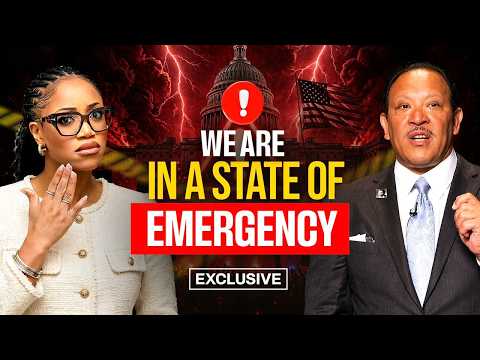
Black America is currently facing a critical moment described as a "state of emergency" by the National Urban League. This declaration comes amid rising unemployment rates, rollback of civil rights protections, and increasing attacks on voting access. The challenges are not isolated but part of a broader political and economic trajectory that threatens to undo decades of progress.
The Black unemployment rate in the United States has risen sharply, nearing 8%, a level comparable only to times of economic recession or depression. This increase translates to millions more Black Americans out of work compared to just two years ago. Concurrently, there has been a systematic assault on equal opportunity, diversity, equity, and inclusion programs, alongside fiscal policies that reduce investments in healthcare, education, community development, and housing.
These developments are part of a broader political backlash fueled by movements such as Trumpism, which capitalizes on racial grievances and misinformation, particularly around voting rights. Efforts to suppress Black voter participation through restrictive laws and misinformation campaigns have been effective, contributing to lower turnout in recent elections.
Reflecting on history, the period from 1955 to 2020 saw significant progress for Black Americans, including the dismantling of segregation and the securing of voting rights. However, progress has often been met with structural rollbacks, a pattern rooted in systemic racism and exclusion embedded within American society.
Despite electing Black leaders to high office, economic parity remains elusive. Black wealth and income lag significantly behind those of white Americans, highlighting the ongoing struggle for true equality.
A critical aspect of empowerment lies in strengthening the economic and cultural ties between Black America and Africa, as well as the broader Black diaspora including the Caribbean and Latin America. Africa, with its 1.5 billion people, represents a vast and largely untapped economic opportunity.
Historically, pan-Africanist movements and congresses sought to unite Black leaders globally, but such efforts have waned. Renewed dialogue and institutional collaboration are necessary to build a cohesive global Black political and economic power base.
The recent United Nations resolution recognizing slavery as the gravest crime against humanity, led by Ghana, marks a significant milestone in the fight for reparations. Reparations are not merely financial payouts but involve repairing systems that have perpetuated inequality, including housing, education, and financial systems.
While the U.S. federal government has been slow to act, local initiatives in states like New York and California are advancing reparatory justice. A coordinated, serious dialogue among African, Caribbean, and Black American leaders is essential to move from symbolic recognition to tangible reparative actions.
Emerging movements that seek to narrowly define Black identity based on lineage or origin threaten to divide the community. Such divisions are often fueled by external forces aiming to weaken collective power.
The reality is that Black identity encompasses a diverse range of experiences, including descendants of enslaved Africans in the U.S., Caribbean, and Africa itself. Unity is crucial to overcoming systemic challenges and advancing shared goals.
Winning in the short term requires massive voter turnout and political participation to halt damaging policies. However, voting alone is insufficient; protest, litigation, and community organizing are vital tools in the struggle for equity.
Institutionally, there is a need for renewed pan-African and diaspora summits to foster dialogue and coordinated action. Civil rights organizations have historically played a role in uniting leaders and can spearhead efforts to build global Black political and economic power.
Black America wields over $3 trillion in economic power, and remittances to Africa exceed $100 billion annually, surpassing foreign aid. Strategic alignment and intentional coordination of this economic power could transform the global Black community's influence.
Other ethnic communities in the U.S. have successfully built economic ties with their countries of origin, and Black America stands to benefit similarly by investing in Africa's industrial and economic rise.
The challenges facing Black America today are profound but not insurmountable. Through unity, strategic political engagement, institutional collaboration, and building strong economic ties with Africa and the global Black diaspora, there is a path to reclaiming and advancing the progress that generations have fought for.
The time to act is now, embracing all tools available—from voting to protest—to build a future of equity, justice, and empowerment for Black communities worldwide.
This comprehensive overview draws on insights from Mark Moriel, president of the National Urban League, highlighting the urgency and complexity of the current moment for Black America and the global Black community.