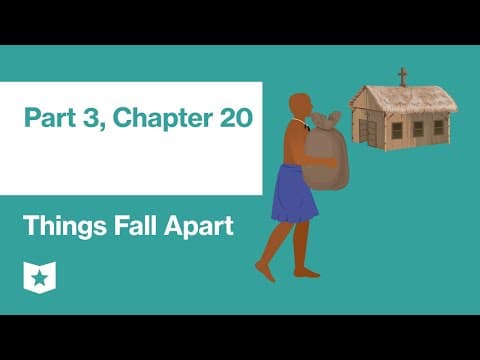
In Chapter 20 of Chinua Achebe's Things Fall Apart, Okonkwo returns to Umuofia determined to reclaim his status and wealth, but he finds the village transformed by colonial influence, leading to a profound sense of loss and disconnection from traditional values.
In Part three, Chapter 20 of Chinua Achebe's seminal work, Things Fall Apart, we witness a significant turning point in the life of the protagonist, Okonkwo, as he returns to his village of Umuofia after a period of exile. This chapter encapsulates the themes of change, loss, and the struggle against colonial influence that permeate the novel.
Upon his return to Umuofia, Okonkwo is filled with determination to reclaim the years he lost during his exile. He has ambitious plans to build a larger compound, take two new wives, and secure titles for his sons, aiming to showcase his wealth and status within the clan. Okonkwo's desire to initiate his sons into the exclusive circles of clan society reflects his deep-seated need for recognition and power.
He has also recovered from the emotional turmoil caused by his estrangement from his son Nwoye, whom he now disparagingly refers to as a woman. Okonkwo's expectations for his five other sons are steep; he intends to raise them as strong men, embodying the traditional masculine ideals of their culture. Additionally, he plans to find a husband for his daughter Ezinma, who has grown into a beautiful young woman during his absence. Ezinma's strong influence over her half-sister, whom she persuades to delay marriage until their father's return, highlights her understanding and loyalty to Okonkwo.
However, upon his return, Okonkwo is confronted with a dramatically altered Umuofia. The village has been transformed by the presence of a church that has attracted high-ranking men who have abandoned their traditional ways. The establishment of a court and an English district commissioner signifies the imposition of colonial rule, which judges legal cases according to foreign laws. This new order is enforced by local court messengers, who are often brutal and oppressive towards the villagers.
One particularly striking incident involves a clansman who is condemned to death for killing a man, a punishment that underscores the absurdity and injustice of the new legal system. The villagers mock the court messengers with the nickname "ashy buttocks," a term that only serves to escalate the violence and aggression of these enforcers.
In a poignant conversation with his friend Obierika, Okonkwo expresses his frustration over the changes in their society. He questions why the people do not resist the new order. Obierika's response is sobering; he reminds Okonkwo of the fate of the Abame people, who faced dire consequences for their resistance. He reflects on the reality that many clansmen have allied with the colonizers, leading to a fractured community.
Obierika articulates a profound truth when he states that the white man has "put a knife on the things that held us together," leading to the disintegration of their society. This metaphor captures the essence of the colonial impact on Igbo culture, as traditional practices of justice, religion, and community are systematically undermined.
Despite the clear observations of his friend, Okonkwo remains largely oblivious to the broader implications of these changes. His fixation on titles and status reflects a refusal to acknowledge that the power dynamics within Umuofia have shifted dramatically. The Christian Church and British government representatives now hold the reins of authority, rendering Okonkwo's aspirations increasingly irrelevant.
Moreover, Okonkwo's patriarchal beliefs prevent him from recognizing the potential within his daughter Ezinma, whom he wishes were a boy. This inability to value the contributions of women further isolates him from the evolving realities of his society.
The chapter concludes with a poignant moment of silence between Okonkwo and Obierika, symbolizing their shared sense of helplessness in the face of overwhelming change. Okonkwo, a man of action, finds himself paralyzed by the challenges confronting his clan. This silence encapsulates the despair and uncertainty that define the lives of the characters in this tumultuous period.
In summary, Chapter 20 of Things Fall Apart serves as a critical reflection on the impact of colonialism on traditional societies. Through Okonkwo's return to a changed Umuofia, Achebe illustrates the profound sense of loss and disconnection that accompanies the erosion of cultural identity and communal bonds. The chapter not only highlights the personal struggles of its characters but also serves as a broader commentary on the devastating effects of colonial rule on indigenous cultures.