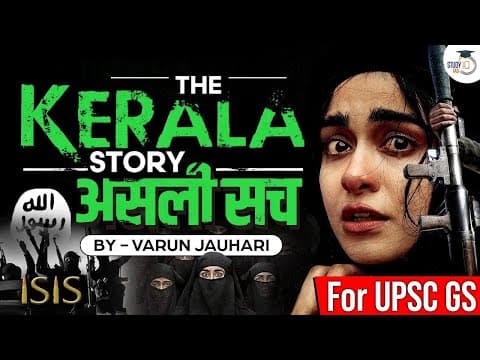
This blog post explores the controversial themes and real-life implications behind the film 'The Kerala Story', focusing on the alleged conversion of young women to Islam and their recruitment by ISIS, as well as the political and social ramifications in Kerala.
In recent years, the film "The Kerala Story" has sparked significant debate and controversy in India. The narrative revolves around the alarming statistic that over 32,000 girls have reportedly gone missing from Kerala over the past decade, raising questions about their fate and the involvement of extremist groups like ISIS. This blog post aims to dissect the claims made in the film, the historical context, and the broader implications for society.
The roots of the controversy can be traced back to the formation of the National Development Front (NDF) in Kerala in 1994, which later transformed into the Popular Front of India (PFI) in 2006. The PFI has been accused of promoting anti-national activities and has been linked to various incidents of religious conversion and radicalization.
The PFI quickly established a presence across India, creating separate wings for various professions, including doctors, lawyers, and journalists. They also set up Islamic education centers, particularly in Kerala, where they allegedly targeted non-Muslim girls for conversion to Islam. Reports from the Catholic Bishops' Council in 2009 indicated that approximately 4,500 Christian girls had converted to Islam, raising alarms about the activities of the PFI.
In 2009, the Kerala High Court acknowledged the existence of "love jihad" or "Romeo jihad," a term used to describe the alleged coercive conversion of women through romantic relationships. This acknowledgment led to increased scrutiny of the PFI and its activities.
Several high-profile cases emerged, including the case of Shahan Shah and Sirajuddin, who were accused of forcibly converting two girls—one Hindu and one Christian—into Islam. The court proceedings revealed a pattern of manipulation and coercion, with the girls being pressured to abandon their faith.
As the years progressed, reports surfaced about the involvement of ISIS in recruiting young women from Kerala. In 2011, two individuals were arrested for allegedly handling recruitment for ISIS, targeting young girls for conversion and radicalization. The situation escalated with the case of Sonia Satheen, who was converted and subsequently recruited by ISIS.
In May 2016, a group of 22 individuals, including women and children, left Kerala for Afghanistan, intending to join ISIS. This incident highlighted the alarming trend of radicalization and the effectiveness of recruitment strategies employed by extremist groups.
The Kerala government has faced criticism for its handling of the situation. Reports from intelligence agencies indicated that thousands of individuals had converted to Islam, with a significant number being young women. The public outcry led to investigations and increased vigilance by law enforcement agencies.
The release of "The Kerala Story" has reignited discussions about these issues, with various political parties and organizations opposing the film's narrative. Critics argue that the film oversimplifies complex social issues and could incite communal tensions.
The narrative surrounding "The Kerala Story" is deeply intertwined with real-life events and societal challenges in Kerala. While the film aims to shed light on serious issues of conversion and radicalization, it also raises questions about the portrayal of these events in media and the potential for misinterpretation. As the debate continues, it is crucial to approach these topics with sensitivity and a commitment to understanding the underlying complexities.