This article examines the claims surrounding Tongkat Ali as a testosterone booster, analyzing various studies and expert opinions to determine its effectiveness, particularly in hypogonadal men versus healthy individuals.
Tongkat Ali has gained significant attention as a herbal supplement purported to increase testosterone levels. From internet personalities to established researchers like Dr. Andrew Huberman, many claim that Tongkat Ali can boost testosterone. However, a closer examination of the studies reveals a more nuanced picture. This article delves into the claims, the science behind them, and what the research actually shows.
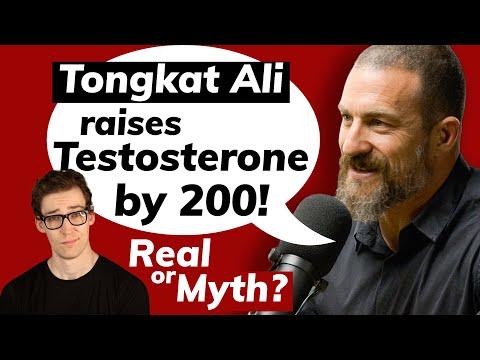
Dr. Andrew Huberman, a prominent neuroscientist, discusses the potential of Tongkat Ali in increasing testosterone levels. He suggests that for most individuals not seeking testosterone augmentation for sports, Tongkat Ali can raise testosterone levels by about 100 to 200 points. This claim is based on the understanding of how testosterone functions in the body, particularly its relationship with sex hormone binding globulin (SHBG).
Testosterone exists in two forms: free (unbound) and bound (attached to proteins like SHBG and albumin). While free testosterone is often desired, a certain amount of bound testosterone is necessary for effective delivery to tissues, including the brain. An excess of SHBG can hinder testosterone's effectiveness, and this is where Tongkat Ali is said to play a role by increasing free testosterone levels.
Despite the optimistic claims, a critical review of the existing studies raises skepticism about the extent of Tongkat Ali's effectiveness. Here are some key findings from various studies:
Hypogonadal Men: One study involving men with insufficient testosterone production (hypogonadal) found a 12% increase in total testosterone after three months of supplementation, translating to about 25 points.
Young Healthy Men: In another study, young men without testosterone issues experienced only a 15% increase in total testosterone, even at higher doses than those recommended by Dr. Huberman.
Exercise Comparison: A separate study that supplemented participants for six months found a 43% increase in testosterone, equating to about a 100-point increase. However, when compared to a group that engaged in basic weightlifting, there was no significant advantage in testosterone levels.
Industry-Funded Research: An industry-funded study reported no significant effect of Tongkat Ali on testosterone levels after three months of supplementation.
To gain a broader perspective, a meta-analysis was conducted, reviewing five studies on Tongkat Ali. This analysis separated studies involving hypogonadal men from those involving healthy men. The findings indicated:
While the meta-analysis provided some insights, it also had limitations:
In summary, while there is some evidence suggesting that Tongkat Ali may increase testosterone levels, particularly in hypogonadal men, the overall effects appear to be modest. For healthy individuals, the benefits may not be substantial, especially when compared to other methods like exercise.
The claims surrounding Tongkat Ali should be approached with caution. It may offer a slight increase in testosterone, but it is unlikely to replace testosterone replacement therapy or provide dramatic results. For those considering Tongkat Ali, it is essential to manage expectations and consider other lifestyle factors that can influence testosterone levels.
In conclusion, while Tongkat Ali may have some merit as a supplement, it is not the miracle solution that some may suggest. Further research is needed to fully understand its effects and potential benefits.