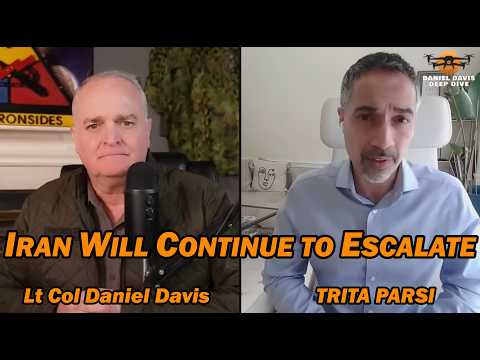
Trita Parsi, vice president of the Quincy Institute, discusses the current state of Iran-U.S. relations, debunking claims that the Iranian government is fracturing. He highlights the persistent divisions within both governments, the failure of U.S. diplomacy under Trump, and the flawed narrative blaming Iran for stalled talks. Parsi warns that continued U.S. pressure and blockades will not force Iranian capitulation and may escalate tensions further.
In recent discussions surrounding the escalating tensions between the United States and Iran, many narratives have emerged about the state of the Iranian government and the prospects for diplomacy. Trita Parsi, vice president of the Quincy Institute, provides a detailed analysis of the situation, challenging widespread misconceptions and offering insight into the complexities of the ongoing conflict.
The President of the United States recently decided to give Iran more time to respond amid rising tensions. This decision came as a surprise to many, especially since it was announced last minute on social media while discussions about potential military action were underway. The rationale behind this delay was the recognition that the Iranian regime is fractured and uncertain internally, with unclear leadership and direction.
However, Parsi cautions against accepting this narrative at face value. He argues that the portrayal of Iran as a divided and leaderless state does not hold up under scrutiny. Instead, he suggests that this narrative serves a political purpose rather than reflecting the reality on the ground.
Parsi emphasizes that there is no credible evidence to support claims that the Iranian government is collapsing or that a coup is imminent. While internal divisions do exist, as they do in any government, these are not unusual or debilitating enough to derail negotiations or governance.
He points out that divisions within the Iranian government become more pronounced during tough negotiations, a phenomenon mirrored in the U.S. government, where even the President exhibits fluctuating positions. The critical question is whether these divisions are significant enough to obstruct diplomatic progress, and Parsi finds no evidence to suggest that they are.
According to Parsi, the failure of diplomacy is more attributable to inconsistent and erratic behavior from the U.S. side, particularly under President Trump. He highlights several factors:
These actions have undermined trust and contributed significantly to the breakdown of negotiations.
Media reports, such as those from Fox News, have circulated alarming claims that the Iranian Revolutionary Guard has taken the Ayatollah hostage, generals are blocking peace talks, and a coup is underway. Parsi dismisses these as part of a blame game designed to shift responsibility away from the U.S. administration's failures.
He explains that this narrative conveniently absolves the U.S. of accountability by portraying Iran as incapable of managing its affairs, thereby justifying the lack of progress in talks.
Despite the narrative of Iranian disarray, the reality is that the U.S. continues to enforce blockades that severely impact Iran's economy, including restrictions on oil, gas, and fertilizer exports. These measures exacerbate economic hardships and compound tensions.
Parsi warns that these tactics are unlikely to compel Iran to capitulate. Past strategies, such as the "maximum pressure" campaign and threats of war, have failed to achieve their objectives. Iran perceives itself as having achieved a strategic victory, making it even less likely to concede.
There is a persistent belief within some U.S. circles that escalating pressure or blockades will eventually force Iran to surrender. Parsi critiques this as an unrealistic and dangerous assumption, noting that it ignores the complexities of Iranian politics and the resilience of its leadership.
He also points out that organizations advocating for these hardline approaches have consistently pushed for war and aggressive policies, which have not yielded the desired outcomes.
Parsi suggests that a reassessment of U.S. strategy is necessary. Rather than relying on coercion and punitive measures, there needs to be a genuine commitment to diplomacy and understanding the realities within Iran.
He acknowledges that divisions exist on both sides and that negotiations are inherently challenging. However, success depends on consistent, professional engagement rather than erratic policies and blame-shifting narratives.
The situation between the U.S. and Iran remains tense and complex. While narratives of Iranian chaos and leadership struggles abound, experts like Trita Parsi urge caution and critical analysis. The failure of diplomacy is more a reflection of U.S. policy inconsistencies than Iranian dysfunction.
Continued escalation and economic pressure are unlikely to yield positive results and may instead deepen the conflict. A strategic, patient, and honest approach to negotiations is essential to avoid further deterioration and to pave the way for a sustainable resolution.