Donald Trump has been sentenced for 34 felony counts related to falsifying business records in a hush money case, resulting in an unconditional release with no fines or probation. This blog post explores the trial's background, the court's decisions, and the broader implications for Trump's political future.
Donald Trump has officially been sentenced for his involvement in a hush money scandal, marking a significant moment in American legal and political history. This blog post will explore the details of the trial, the court's decisions, and the potential implications for Trump's future.
In 2016, during his presidential campaign, Trump’s fixer made secret payments to silence allegations of an affair. This maneuver was successful in keeping the story under wraps, allowing Trump to secure the presidency. However, in 2024, a New York jury convicted Trump of falsifying business records to conceal the true nature of these payments.
Judge Juan Merchan initially scheduled Trump's sentencing for July 11, 2024. However, the Supreme Court's decision in Trump versus United States, which temporarily halted all cases against Trump, led to a rescheduling for September 2024. Trump’s legal team argued that sentencing him on 34 felony counts could jeopardize his re-election chances, prompting Judge Merchan to delay the sentencing until after the election.
After winning the election, Trump faced the unprecedented situation of being a president-elect with a felony conviction. The sentencing was ultimately set for January 10, 2025, with Trump allowed to appear virtually.
Throughout the proceedings, Trump filed multiple motions to dismiss the indictment, claiming presidential immunity and alleging misconduct by the prosecution. Judge Merchan denied these motions, emphasizing the importance of respecting the jury's verdict and the integrity of the judicial process.
The judge noted Trump's repeated attacks on the justice system and found him guilty of 10 counts of contempt for violating court orders. He stated that Trump's disdain for the judicial process was a matter of public record and highlighted the defendant's lack of respect for the rule of law.
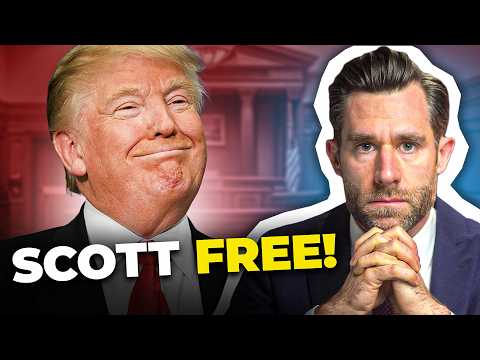
On the day of sentencing, Trump received an unconditional release, meaning he would face no fines, jail time, probation, or community service. While he is now officially a convicted felon with 34 felony counts on his record, the lack of any real punishment has raised questions about accountability for high-profile figures.
Prosecutor Joshua Steinglass remarked that Trump has caused enduring damage to public perception of the criminal justice system and noted that Trump sees himself as above the law. Despite this, the prosecution agreed that unconditional release was the appropriate sentence, arguing that the American people deserve a presidency unencumbered by ongoing legal issues.
During the sentencing, Trump maintained his innocence, claiming that the payments were labeled correctly as legal expenses. He criticized the prosecution and reiterated his belief that he did nothing wrong. Trump's legal team indicated plans to appeal the conviction, asserting that the case should never have been filed.
Judge Merchan praised the jury's work and emphasized that the protections afforded to the presidency apply to the office, not the individual. He clarified that the legal protections do not mitigate the seriousness of the crime.
Legal experts have weighed in on the implications of the sentencing. Some believe that the unconditional release was a strategic decision influenced by the Supreme Court's ruling, which has raised concerns about the integrity of the judicial system. Others argue that the outcome reflects a troubling precedent for accountability among political figures.
Mitchell Ebner, a New York criminal law practitioner, noted that the handling of the case was likely the only way Judge Merchan could proceed given the circumstances. He expressed concern over the Supreme Court's decision-making and its potential impact on future cases involving political figures.
Donald Trump's sentencing marks a pivotal moment in American politics and law. While he faces no immediate repercussions, the implications of his felony convictions could resonate throughout his political career. As the legal landscape continues to evolve, the intersection of law and politics remains a critical area of public interest and scrutiny.