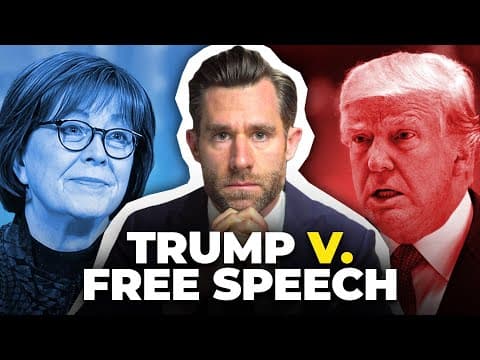
Donald Trump has filed a lawsuit against pollster Ann Selzer and the Des Moines Register, claiming election interference due to a poll predicting Vice President Kamala Harris would lead him in Iowa. The lawsuit raises questions about free speech, consumer protection laws, and the integrity of polling methods.
In a surprising turn of events, former President Donald Trump has initiated a lawsuit against pollster Ann Selzer and the Des Moines Register, alleging that a poll predicting Vice President Kamala Harris would lead him in Iowa constituted election interference. This legal action has sparked widespread debate about the implications for free speech, the integrity of polling, and the nature of consumer protection laws.
The controversy began on November 2, 2024, when a poll conducted by Selzer for the Des Moines Register indicated that Harris was leading Trump by three points in Iowa. This prediction contradicted an earlier Emerson College poll that showed Trump leading by ten points. The release of Selzer's poll caused significant unrest among pollsters and media outlets, with many questioning whether Trump's support had been overestimated.
However, just days later, Trump won Iowa decisively by 13 points, outperforming Selzer's prediction by 16 points. This outcome led to a reevaluation of Selzer's polling methods, which had previously been regarded as reliable. Selzer herself acknowledged that her polling errors were due to issues with weighting and methodology, which had not been adjusted to reflect the expected voter turnout.
On December 16, 2024, Trump filed his lawsuit in the Iowa District Court for Polk County, accusing Selzer and the Des Moines Register of violating the Iowa Consumer Fraud Act. The lawsuit alleges that Selzer and her associates engaged in "brazen election interference" by manipulating polling data to influence the election's outcome. Trump claims that the poll was not merely a miscalculation but a deliberate attempt to discourage his voters, leading to unnecessary resource diversion during a critical election period.
The complaint is filled with partisan rhetoric, naming various media figures and suggesting a conspiracy to undermine Trump's campaign. Trump specifically criticized Selzer for her media appearances discussing the poll, arguing that her actions were intended to mislead voters.
The lawsuit raises significant questions about free speech and the legal boundaries of polling. Critics argue that Selzer's right to conduct and discuss polling is protected under the First Amendment, which affords robust protections to political speech. Legal precedents indicate that false statements, even if made recklessly, do not necessarily constitute grounds for a lawsuit unless they can be tied to defamation or fraud.
Trump's legal team attempts to frame the lawsuit as a consumer protection issue, citing Iowa's Consumer Fraud Act. However, legal experts contend that this statute is intended to protect consumers in commercial transactions, not to regulate political speech or polling practices. The argument that voters are consumers in this context is seen as a stretch, as the law typically applies to goods and services rather than political opinions or predictions.
Selzer's polling methods, which have historically been accurate, are now under scrutiny. After the election, she acknowledged that her approach needed reevaluation, particularly in light of changing methodologies in the polling industry. Many pollsters have shifted away from traditional random telephone surveys to more modern techniques that utilize voter files to contact likely voters.
Despite the criticism, Selzer maintains that her data collection methods were consistent with her previous successful polls. She has denied any allegations of fabricating data or intentionally misleading the public, emphasizing that her polling was a reflection of the electorate at a specific time.
Trump's lawsuit against Selzer and the Des Moines Register is emblematic of the broader tensions surrounding political polling and free speech in the United States. While the former president seeks to challenge unfavorable polling results through legal means, the implications of such actions could have chilling effects on the media's ability to report on electoral dynamics. As the legal proceedings unfold, the case will likely serve as a critical test of the boundaries between political speech, consumer protection, and the integrity of polling practices in American democracy.