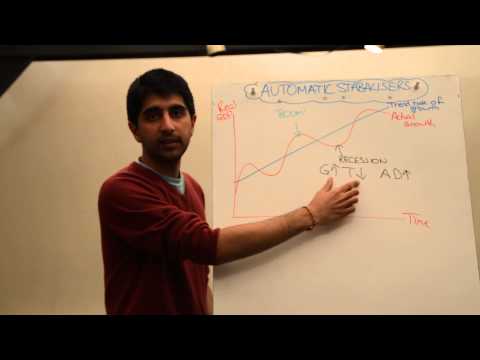
Automatic stabilizers are mechanisms within fiscal policy that help mitigate the fluctuations of the economic cycle without active government intervention. They increase government spending and decrease tax revenue during recessions, while doing the opposite during economic booms, thus stabilizing the economy.
Automatic stabilizers are essential tools within fiscal policy that help to smooth out the fluctuations in economic growth, particularly during the business cycle. This blog post will explore how automatic stabilizers function, their impact during different phases of the economic cycle, and their overall significance in maintaining economic stability.
To understand automatic stabilizers, it is crucial to first grasp the concept of the economic cycle. The economic cycle consists of periods of expansion (booms) and contraction (recessions). During these cycles, economies experience peaks and troughs, which can lead to significant fluctuations in growth rates.
Automatic stabilizers operate without the need for active government intervention. They are built into the fiscal policy framework and respond automatically to changes in the economic environment. Let's examine their functioning during two key phases of the economic cycle: recessions and booms.
In the heart of a recession, the economy typically experiences high unemployment and underutilized resources. Here’s how automatic stabilizers come into play:
Increased Government Spending: As unemployment rises, more individuals become eligible for government benefits such as unemployment insurance. Consequently, government spending on these benefits automatically increases.
Decreased Tax Revenue: With fewer people employed, income tax revenues decline. Additionally, businesses face lower profits, leading to reduced corporation tax revenues.
These factors contribute to an increase in aggregate demand, helping to cushion the economy from the full impact of the recession without requiring active policy changes from the government.
Conversely, during periods of economic expansion, the dynamics shift:
Decreased Government Spending: With more individuals employed, the need for government benefits diminishes, leading to a decrease in government spending on these programs.
Increased Tax Revenue: As employment rises, income tax revenues increase due to more individuals paying taxes. Additionally, businesses experience higher profits, resulting in increased corporation tax revenues.
These changes help to reduce aggregate demand, preventing the economy from overheating and stabilizing growth during boom periods.
The primary function of automatic stabilizers is to reduce the overall fluctuations in the business cycle. By automatically adjusting government spending and tax revenues, they help the economy transition along a smoother growth path.
For instance, without automatic stabilizers, the economic growth line might deviate significantly from the trend rate during recessions and booms. However, with these stabilizers in place, the deviations are minimized, leading to a more stable economic environment.
While automatic stabilizers play a crucial role in stabilizing the economy, their effects can be relatively small. In some cases, active fiscal policy measures may still be necessary to address severe recessions or to control rapid inflation during boom periods.
In summary, automatic stabilizers are vital components of fiscal policy that help mitigate the fluctuations of the economic cycle. By automatically adjusting government spending and tax revenues in response to economic conditions, they contribute to a more stable economic environment. Understanding their role is essential for comprehending how governments can effectively manage economic fluctuations without the need for constant intervention.





