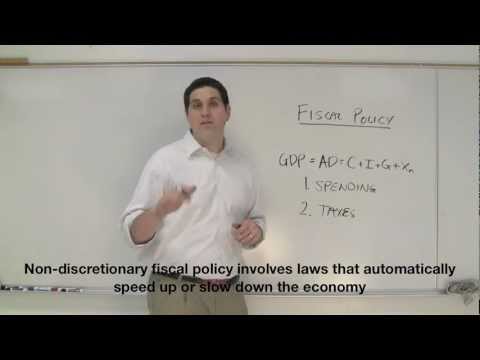
This blog post explores the concept of fiscal policy, focusing on automatic stabilizers, which are non-discretionary measures that help stabilize the economy during fluctuations. It explains the difference between discretionary and non-discretionary fiscal policies, the role of government spending and taxes, and how these elements interact to influence economic conditions.
Fiscal policy is a fundamental concept in economics that refers to the laws and regulations enacted by the legislative branch to influence a nation's economy through government spending and taxation. This blog post will delve into the key aspects of fiscal policy, particularly focusing on automatic stabilizers, which play a crucial role in managing economic fluctuations without the need for new legislation.
Fiscal policy encompasses two primary components: government spending and taxes. These elements are used to either stimulate the economy or cool it down, depending on the current economic conditions.
There are two main types of fiscal policy:
Automatic stabilizers are mechanisms that help stabilize the economy during periods of recession or economic growth without requiring new legislation. They work by automatically increasing government spending or decreasing taxes when the economy is struggling, and conversely, they decrease spending or increase taxes when the economy is booming.
In contrast to automatic stabilizers, discretionary fiscal policy requires active intervention by the government. For instance, if the economy is in a severe recession, the government may decide to increase spending to boost aggregate demand and stimulate economic growth. This can involve funding infrastructure projects, increasing public services, or providing direct financial assistance to citizens.
Tax policy is another critical aspect of discretionary fiscal policy. In times of economic downturn, the government may opt to decrease taxes to increase disposable income for consumers. This encourages spending and can help lift the economy out of recession. Conversely, if inflation is a concern and the economy is growing too quickly, the government may increase taxes to reduce disposable income and curb excessive spending.
In summary, fiscal policy is a vital tool for managing economic stability, with automatic stabilizers playing a key role in responding to economic fluctuations without the need for new legislation. Understanding the difference between discretionary and non-discretionary fiscal policies, as well as the impact of government spending and taxation, is essential for grasping how economies function and how governments can influence economic outcomes. By effectively utilizing these tools, governments can help ensure a more stable economic environment for their citizens.





