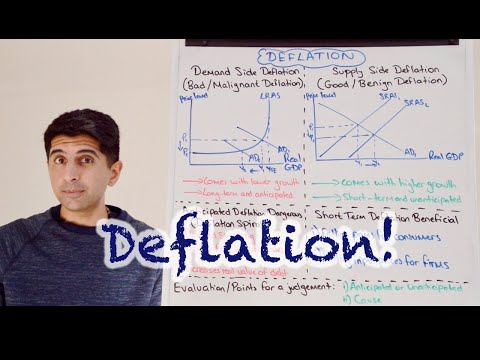
Deflation, characterized by a persistent fall in prices, can have both positive and negative effects on the economy. It is categorized into demand-side (bad) and supply-side (good) deflation. While short-term deflation can benefit consumers and businesses, anticipated deflation can lead to a deflationary spiral, resulting in lower growth and higher unemployment. Understanding the nuances of deflation is crucial for economic stability.
Deflation is defined as the persistent fall in prices within an economy over a year, representing the opposite of inflation. While it may initially seem beneficial—allowing consumers to purchase goods and services at lower prices—deflation can have severe negative consequences for the economy.
Deflation occurs when the inflation rate is negative, leading to a decrease in the general price level of goods and services. This situation can enhance consumers' purchasing power, allowing them to buy more with their income. For businesses, falling prices can reduce input costs, potentially widening profit margins. However, the reality of deflation is far more complex.
Deflation can be categorized into two main types:
Demand-Side Deflation (Bad Deflation): Also known as malignant deflation, this occurs when aggregate demand (AD) shifts to the left, leading to lower economic growth and potentially long-term deflation. This type of deflation is often associated with recessions, where reduced consumer spending leads to a downward spiral in economic activity.
Supply-Side Deflation (Good Deflation): Referred to as benign deflation, this occurs when the short-run aggregate supply (SRAS) shifts to the right, often due to lower production costs. This type of deflation is generally seen as less harmful because it is typically short-term and can stimulate economic growth.
Demand-side deflation is particularly concerning for several reasons:
In contrast, supply-side deflation can have positive effects:
One of the critical issues during deflation is the increase in the real value of debt. As prices fall, the fixed value of debt becomes more burdensome for both consumers and businesses. For example, if a household has a mortgage of £200,000, that amount does not change with deflation. However, if incomes and profits are falling, servicing that debt becomes increasingly difficult, leading to a reluctance to borrow and invest.
Historical examples illustrate the dangers of deflation. Japan has struggled with deflation since the 1990s, following a banking crisis, while Greece has experienced prolonged deflation since its recession in 2010. Both cases highlight how anticipated deflation can lead to severe economic stagnation.
In summary, deflation is a complex economic phenomenon with both positive and negative implications. While short-term deflation can benefit consumers and businesses, anticipated deflation poses significant risks, including lower growth and higher unemployment. Understanding the nuances of deflation—particularly the distinction between demand-side and supply-side deflation—is crucial for policymakers and economists aiming to maintain economic stability.





