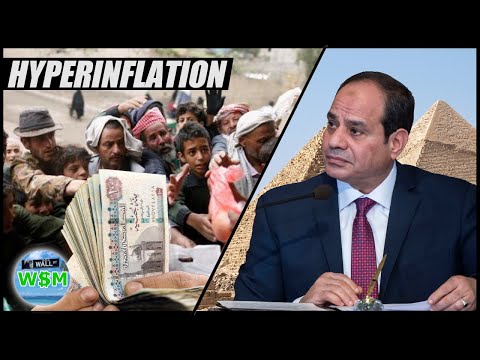
Egypt is facing a severe economic crisis characterized by hyperinflation, currency depreciation, and rising poverty levels. This blog post explores the root causes of the crisis, including historical mismanagement, the impact of the COVID-19 pandemic, and the war in Ukraine, as well as the government's response through IMF bailouts and proposed privatization of state-owned enterprises.
Egypt, the largest country in the Arab world with a population of 109 million, is currently grappling with a severe economic crisis that has pushed millions into poverty. This blog post delves into the root causes of Egypt's hyperinflation crisis, the historical context, and the implications for its citizens.
From 1981 to 2011, Egypt was ruled by President Hosni Mubarak, whose regime was marked by corruption and economic mismanagement. Although the economy grew due to oil and natural gas development and tourism, the benefits were concentrated among the wealthy, leaving the majority in poverty. The widespread discontent culminated in mass protests, leading to Mubarak's ouster in 2011.
Following Mubarak, Egypt elected Mohamed Morsi, whose presidency was short-lived due to political polarization and protests that led to a military coup in 2013. General Abdel Fattah al-Sisi became president, and under his rule, the Egyptian pound was pegged to the US dollar until 2016, when foreign investors began pulling out due to political instability.
Egypt has long faced significant trade deficits, with imports exceeding exports by at least $20 billion annually since 2014. The country's growing population creates increasing consumer demand, but its ability to produce enough food and necessities is limited due to the vast unarable desert.
In 2016, the Egyptian government was forced to abandon the fixed exchange rate due to dwindling foreign currency reserves, leading to a 60% depreciation of the pound. This depreciation, while painful for consumers, made Egyptian tourism cheaper and boosted exports. However, the economic stability achieved post-2016 was short-lived.
The pandemic severely impacted Egypt's economy, particularly the tourism sector, which saw a 70% decline in visitors in 2020. Additionally, falling oil prices further strained the economy. The Central Bank attempted to stabilize the pound by selling foreign reserves, but this was a temporary fix.
In 2022, the war in Ukraine exacerbated Egypt's economic woes. With a significant portion of tourists coming from Russia and Ukraine, the conflict led to a sharp decline in visitors. Furthermore, Egypt, the world's largest wheat importer, faced skyrocketing prices as both countries are major wheat exporters. The government's longstanding subsidy system for bread, which kept prices artificially low, became increasingly unsustainable.
In response to the crisis, the Egyptian government implemented a policy requiring imports to be paid for with letters of credit, complicating the import process and further straining the economy. By mid-2022, the situation had deteriorated to the point where the government sought assistance from the International Monetary Fund (IMF).
In December 2022, Egypt secured a $3 billion emergency loan from the IMF, which came with conditions for economic reform. The government agreed to reduce the military's role in the economy and privatize state-owned enterprises. President Sisi announced plans to sell $10 billion worth of shares in state-owned companies annually for the next four years.
The privatization of military-owned companies is seen as a crucial step towards stabilizing the economy and attracting foreign investment. However, the success of these reforms remains uncertain, and many Egyptians continue to struggle with rising prices and economic instability.
Egypt's hyperinflation crisis is a complex issue rooted in historical mismanagement, external shocks, and structural economic challenges. As the government navigates this turbulent period, the effectiveness of proposed reforms and the ability to stabilize the economy will be critical for the future of its citizens. The situation serves as a stark reminder of the fragility of economic systems and the importance of sound governance.





