This blog post explores the complexities of financial crises, their unpredictability, and the role of unconventional monetary policies in mitigating their effects. It delves into concepts such as systemic risk, leverage, herding behavior, and the impact of speculative bubbles, particularly in the context of the 2008 financial crisis.
In this blog post, we will explore the intricacies of financial crises, their unpredictability, and the unconventional monetary policies that have emerged in response to such crises. We will focus on the objectives outlined in Chapter 30 of our study material, particularly the first objective: understanding how financial crises occur and why they are challenging to predict.
Financial crises often seem to arise unexpectedly, leaving economists puzzled. Despite the rational behavior expected from individuals in financial markets, crises can occur when assets become fundamentally overvalued. This phenomenon can be attributed to herding behavior, where individuals follow the crowd, and what John Maynard Keynes referred to as "animal spirits."
Herding behavior can lead to speculative bubbles, where asset prices rise significantly above their intrinsic value. When these bubbles burst, the consequences can be dire, affecting entire classes of financial assets simultaneously. If individuals have heavily invested in these assets using leverage, the fallout can lead to insolvency for both households and financial institutions.
It is crucial to differentiate between everyday risk and systemic risk. Everyday risk is manageable through diversification, such as spreading investments across various assets. In contrast, systemic risk is inherent in the financial system and cannot be diversified away. It arises when financial institutions are interconnected and leveraged, making them vulnerable to common economic shocks.
Leverage refers to the practice of using borrowed funds to increase the potential return on an investment. While leverage can amplify gains when asset prices rise, it can also magnify losses when prices fall. This duality of leverage is a significant factor in the severity of financial crises.
The financial crisis of 2007-2009 serves as a case study for understanding these concepts. During this period, the housing market experienced a significant bubble fueled by easy access to credit and speculative investments. As housing prices soared, many individuals and institutions became highly leveraged, believing that prices would continue to rise.
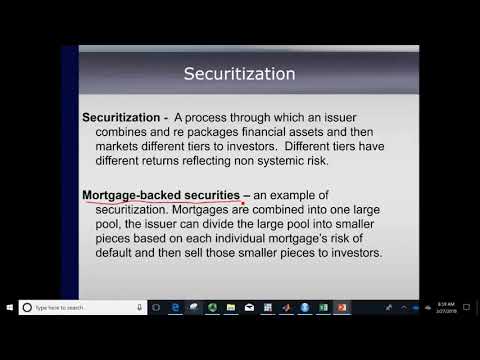
A key factor in the crisis was the process of securitization, where financial institutions combined and repackaged mortgages into mortgage-backed securities (MBS). These securities were marketed to investors in different risk tiers. However, as the housing market began to decline, the value of these MBS plummeted, leading to widespread uncertainty and a loss of confidence in financial institutions.
When the housing bubble burst, housing prices fell dramatically, leading to a significant decline in the solvency of both households and banks. Many homeowners found themselves with negative equity, meaning they owed more on their mortgages than their homes were worth. This situation prompted many to walk away from their mortgages, exacerbating the crisis.
Banks, heavily invested in mortgage-backed securities, faced severe losses as asset values dropped. The leverage employed by these institutions magnified their losses, leading to insolvency for many banks. As banks began to fail, credit markets froze, further deepening the economic downturn.
Understanding the dynamics of financial crises requires a grasp of concepts such as systemic risk, leverage, herding behavior, and the role of speculative bubbles. The 2007-2009 financial crisis exemplifies how these factors can converge to create a significant economic downturn. As we move forward, it is essential to consider the lessons learned from this crisis and the unconventional monetary policies developed to mitigate its effects.
In the next part of our discussion, we will delve into the unconventional monetary policies implemented during the Great Recession and their implications for future economic stability.





