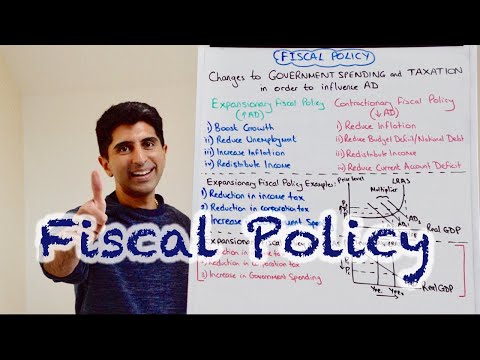
Fiscal policy is a macroeconomic tool used by governments to influence aggregate demand through changes in government spending and taxation. This blog post explores the concepts of expansionary and contractionary fiscal policy, their purposes, mechanisms, and effects on the economy, including growth, unemployment, inflation, and income inequality.
Fiscal policy is a crucial macroeconomic policy that involves adjustments to government spending and taxation to influence aggregate demand within an economy. This policy can be categorized into two main types: expansionary fiscal policy and contractionary fiscal policy.
Expansionary fiscal policy refers to changes in government spending (G) and taxation (T) aimed at boosting aggregate demand (AD). This approach is typically employed during periods of sluggish economic growth or recession. The primary objectives of expansionary fiscal policy include:
When the economy is underperforming, increasing aggregate demand can stimulate economic growth. By shifting AD to the right, the government can help revive economic activity.
In a recession, higher aggregate demand leads to increased production of goods and services. Consequently, firms require more workers, which helps reduce cyclical unemployment.
While controlling inflation is primarily the responsibility of central banks, a slight increase in inflation may be desirable if the inflation rate is below target. Expansionary fiscal policy can theoretically contribute to this effect by increasing aggregate demand.
Expansionary fiscal policy can also address income inequality through government spending on welfare benefits and reducing tax rates for lower-income individuals. This redistribution can help improve the economic situation for disadvantaged groups.
Conversely, contractionary fiscal policy involves reducing aggregate demand through changes in government spending and taxation. The reasons for implementing contractionary fiscal policy include:
If the economy is experiencing high demand-pull inflation, reducing aggregate demand can help stabilize prices.
Governments may use contractionary fiscal policy to decrease borrowing and manage public debt more effectively.
Similar to expansionary policy, contractionary measures can also aim to redistribute income, often through higher taxes on wealthier individuals to fund social programs for the less fortunate.
By reducing aggregate demand, contractionary fiscal policy can lower income levels, which in turn reduces spending on imports, helping to address trade deficits.
To effectively implement expansionary fiscal policy, governments can utilize various tools:
Increasing government spending on essential services such as healthcare, education, and infrastructure can directly boost aggregate demand. This spending not only stimulates the economy but can also have long-term benefits by enhancing the productive capacity of the economy.
An important concept related to expansionary fiscal policy is the multiplier effect. When aggregate demand increases, it leads to higher incomes, which in turn fosters more spending. This creates a virtuous cycle of increased consumption and income, further amplifying the initial boost to aggregate demand.
While the primary goal of expansionary fiscal policy is to boost aggregate demand, it can also have positive side effects on long-run aggregate supply. For instance:
In summary, fiscal policy plays a vital role in managing economic performance through government spending and taxation. Expansionary fiscal policy aims to stimulate growth, reduce unemployment, and address income inequality, while contractionary fiscal policy seeks to stabilize the economy and manage public finances. Understanding these mechanisms is essential for grasping how governments can influence economic conditions and improve overall societal welfare.





