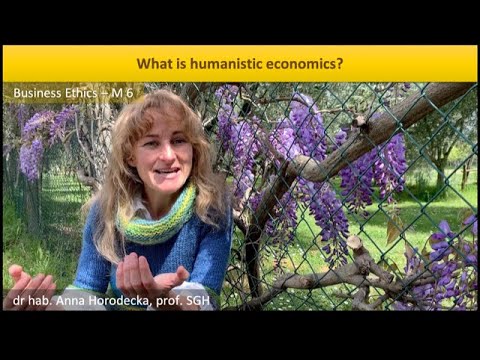
Humanistic economics redefines traditional economic theories by focusing on fulfilling human needs and community well-being rather than merely maximizing utility. It emphasizes the importance of cultural, historical, and social factors in economic decision-making.
Humanistic economics is an emerging framework that seeks to reshape our understanding of economic processes by prioritizing human needs and community well-being. This approach diverges from traditional economic theories, which often focus on utility maximization and individual choices.
At its core, humanistic economics is concerned with the theoretical understanding and development of institutional solutions that enhance the production, distribution, and consumption of goods and services. The ultimate goal is to satisfy a hierarchy of human needs, moving beyond the limitations of conventional economic models.
Traditional economics often relies on the concept of homo oeconomicus, a rational agent who makes decisions solely based on maximizing utility. In contrast, humanistic economics introduces a more nuanced view of the economic agent, one that recognizes the complexity of human needs and the pursuit of self-fulfillment. This perspective acknowledges that individuals are motivated by various hierarchical needs, not just economic gain.
Humanistic economics shifts the focus from optimizing choices to satisfying needs. This approach becomes particularly relevant when certain needs, especially collective ones, are not adequately met by market mechanisms. In such cases, humanistic economics explores alternative formal and non-formal institutions that can fulfill these needs.
A significant aspect of humanistic economics is its emphasis on community. Unlike traditional models that prioritize individualism, this framework recognizes the importance of social structures, cultural norms, and historical contexts in shaping economic behavior. By focusing on the community, humanistic economics highlights how collective well-being contributes to individual fulfillment.
Humanistic economics encompasses several critical themes:
Humanistic economics shares similarities with various philosophical and economic schools of thought, including:
In summary, humanistic economics offers a refreshing perspective on economic theory by prioritizing human needs, community, and cultural factors. By moving away from the narrow focus on utility maximization, this framework encourages a more holistic understanding of economic processes that can lead to a more equitable and sustainable society. As we continue to explore the complexities of human behavior and economic interactions, humanistic economics provides valuable insights into creating a better world for all.





