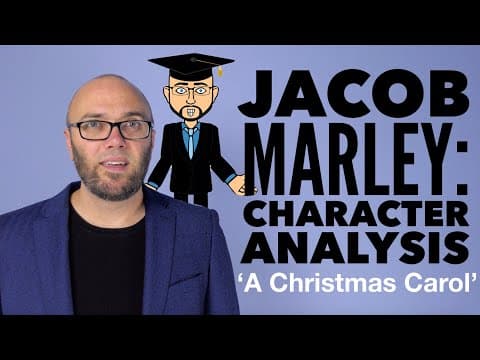
This blog post explores the character of Jacob Marley in Charles Dickens' 'A Christmas Carol', analyzing his role as a ghostly figure who warns Scrooge about the consequences of greed and the importance of social responsibility.
Jacob Marley, the deceased business partner of Ebenezer Scrooge, is a pivotal character in Charles Dickens' classic novella, 'A Christmas Carol'. His appearance as the first ghost sets the stage for the transformative journey that Scrooge will undergo. This post delves into Marley's character, his significance, and the themes he embodies.
From the very beginning of the novella, Dickens establishes Marley's death with the striking line, "Marley was dead: to begin with." This declaration not only shocks the reader but also introduces the supernatural elements of the story. The title of the stave, "Marley’s Ghost," hints at the eerie and otherworldly experience that follows. This opening line creates anticipation and signals the theme of time being turned upside down, as 'A Christmas Carol' unfolds as a narrative that traverses different temporal dimensions.
Marley's visit is crucial in clarifying the structure of the story. He informs Scrooge that he will be visited by three more spirits, which helps both Scrooge and the reader understand the upcoming events. Dickens employs repetition to emphasize Marley's death, using phrases like "Marley was as dead as a door-nail" and mentioning Scrooge as the "sole mourner" at Marley's funeral. This insistence on Marley's death leaves no doubt that the first time we see him, he will be in ghostly form.
The theme of the supernatural is further developed when Scrooge first sees Marley's face on his door knocker. Although he dismisses this vision, it foreshadows the ghost's later appearance. When Marley finally appears, Dickens uses vivid imagery to describe him, particularly his heavy chains made of "cash-boxes, keys, padlocks, ledgers, deeds, and heavy purses." These items symbolize Marley's greed and obsession with wealth during his lifetime.
Marley's ghost serves as a warning to Scrooge about the consequences of his own greed and lack of social responsibility. He states, "I wear the chain I forged in life," indicating that his current suffering is a direct result of his past actions. This notion aligns with the Catholic belief in Purgatory, where souls endure suffering before achieving redemption. However, the use of the word "doomed" suggests that Marley has been judged and condemned to wander the earth without hope of salvation.
Through various literary techniques, Dickens illustrates Marley's regret for his past behavior. When Marley declares, "Mankind was my business," he contrasts his previous focus on profit with the moral obligation to care for others. This statement serves as a poignant reminder to Scrooge and the readers about the importance of human connection and social responsibility.
The repetition of the word "sole" in describing Scrooge as Marley's "sole friend" and the "sole mourner" at his funeral highlights the loneliness that accompanies their relentless pursuit of wealth. This imagery resonates with the earlier description of Scrooge as "solitary as an oyster," yet unlike the oyster, there is no hidden pearl of redemption for Marley.
Ultimately, Marley embodies Dickens' message about the necessity of social responsibility. He urges Scrooge to change his ways to avoid a similar fate. By invoking the concept of Purgatory, Dickens emphasizes the Christian duty to help others, encapsulated in his own words from "The Life of Our Lord":
"Remember! — It is Christianity To Do Good always — even to those who do evil to us. It is Christianity to love our neighbour as ourself, and to do to all men as we would have them Do to us."
Jacob Marley serves as a crucial catalyst for Scrooge's transformation in 'A Christmas Carol'. Through his ghostly visit, Dickens not only warns Scrooge of the consequences of his actions but also imparts a timeless lesson about the importance of compassion and social responsibility. As readers, we are reminded that our actions have lasting impacts, and it is never too late to change for the better.