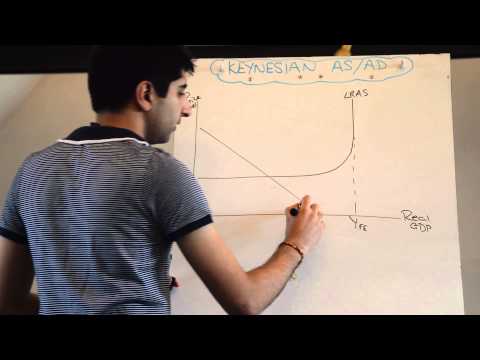
This blog post explores the fundamental differences between Keynesian and Classical economic models, focusing on aggregate supply and demand. It highlights Keynes' critique of the classical model, particularly the assumptions about wages and the economy's self-healing capabilities, advocating for active demand-side management to address unemployment and economic downturns.
In the realm of economic theory, the debate between Classical and Keynesian models has been pivotal in shaping our understanding of aggregate supply and demand. This post delves into the key differences between these two schools of thought, particularly focusing on the insights provided by John Maynard Keynes.
The Classical model of economics posits that markets are self-correcting and that economies naturally move towards full employment. However, Keynes fundamentally disagreed with this notion, particularly the distinction between short-run and long-run economic behavior. He argued that the classical assumption of a self-healing economy is flawed, especially during periods of economic downturn.
Keynes criticized the Classical model's assumption that wages are flexible and can adjust in the long run. He deemed the idea of a clear separation between short-run and long-run aggregate supply as unrealistic. According to Keynes, aggregate supply should be viewed as a singular concept, not divided into short-run and long-run categories. He emphasized that aggregate supply is determined by the level of spare capacity in the economy.
Keynes acknowledged that there exists a Full Employment level of output, which aligns with the Classical model's concept of maximum utilization of production factors. However, he argued that this level is not always vertical, as the Classical model suggests. Instead, he proposed that during times of recession, the aggregate supply curve can be horizontal, indicating significant spare capacity in the economy.
One of Keynes' most significant contributions to economic theory is the concept of sticky wages. He argued that during recessions, workers are resistant to wage cuts, which prevents the economy from self-correcting. This resistance leads to prolonged periods of high unemployment and economic stagnation. Keynes famously stated that waiting for wages to adjust downward could result in dire consequences for the economy, including social unrest and prolonged suffering.
Keynes' theories were largely influenced by the economic conditions during the Great Depression of the late 1920s and early 1930s. At that time, policymakers adhered to Classical economic principles, waiting for wages to decrease naturally. However, this approach failed to yield results, prompting Keynes to advocate for a more active role in economic management.
In response to the limitations of the Classical model, Keynes proposed active demand-side management as a solution to economic downturns. He argued that during recessions, the government should implement policies to increase aggregate demand, thereby moving the economy closer to full employment levels.
Keynes suggested that the most effective way to boost aggregate demand is through active fiscal policy, which includes increasing government spending and reducing taxes. He believed that even if this approach required borrowing, it would ultimately lead to higher tax revenues during periods of economic growth, thus offsetting the initial deficit.
The Keynesian model gained popularity among politicians, particularly during the Great Depression, as it allowed for a greater role of government in the economy. This approach not only provided a framework for addressing unemployment but also offered politicians a means to gain public support by demonstrating proactive economic management.
In summary, Keynesian economics presents a compelling alternative to Classical economic theory by addressing its limitations, particularly regarding wage flexibility and the self-healing nature of the economy. By advocating for active demand-side management, Keynes provided a framework that remains relevant in contemporary economic discussions, especially during times of economic distress. Understanding these concepts is crucial for grasping the complexities of macroeconomic management and the ongoing debates in economic theory.





