This blog post explores the concept of neocolonialism, particularly focusing on China's investments in Africa, the implications of these actions for political and economic power dynamics, and the broader context of territoriality and shatter belts in global geography.
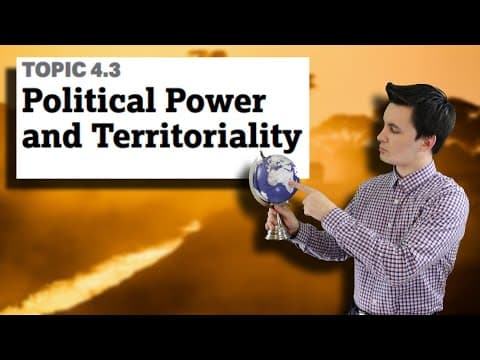
In the study of geography, territoriality refers to how individuals or groups communicate ownership or occupation of a geographic area. This connection to land is often expressed through boundaries, military actions, or general control over a location. Understanding territoriality is crucial as it lays the groundwork for discussing political power and influence in the context of neocolonialism.
While traditional colonialism and imperialism have largely diminished, the quest for political and economic power continues through neocolonialism. This term describes the indirect control that more developed countries (MDCs) exert over less developed countries (LDCs) through political and economic influence. The practice emerged after World War II, particularly as former colonies gained independence but found themselves dependent on their former rulers.
Neocolonialism is often linked to capitalism and globalization, highlighting how MDCs exploit LDCs to enhance their own economic and political status. This imbalance of power is a critical theme in understanding global relations, particularly in the context of Africa and China.
China has significantly increased its presence in Africa, particularly since 2018 when it announced plans to invest over 60 billion dollars in various projects across the continent. This investment primarily takes the form of assistance and loans, positioning China as the leading foreign funder of infrastructure projects in Africa, second only to African governments themselves.
Some notable examples of China's investments include:
These investments often come with relatively low interest rates, but they are risky for the borrowing countries, which may struggle to repay them. However, China's strategy appears to be focused on gaining political and economic leverage rather than immediate financial returns.
China has recognized the increasing urbanization rates in many African countries, which indicates a shift in economic activities from the primary sector to secondary and tertiary sectors. This demographic transition presents opportunities for China to expand its influence and benefit economically from these developing nations.
As a result, China has become the number one trading partner for many African countries, moving manufacturing jobs to Africa to take advantage of cheaper labor. This shift raises questions about the long-term implications for both China and the African nations involved.
China's investments are not merely economic; they also serve political purposes. For instance, countries in Africa that recognize Taiwan as a state receive fewer infrastructure projects from China, while those that align with China in international forums, such as the United Nations, benefit from increased project funding. This dynamic illustrates how economic incentives are used to gain political allegiance.
The discussion of neocolonialism also leads to the concept of choke points—strategic geographic locations that control significant trade routes. The South China Sea and the Strait of Malacca are prime examples of such choke points, where control can lead to substantial political and economic power. The implications of controlling these areas are profound, as any disruption could have disastrous effects on the global economy.
In addition to choke points, the concepts of shatter belts and cultural shatter belts are essential in understanding geopolitical dynamics. A shatter belt is a region caught between external forces, leading to political, economic, and cultural pressures. Eastern Europe during the Cold War serves as a historical example, while Kashmir is a contemporary case.
Cultural shatter belts, on the other hand, are regions where different cultures come into contact and conflict, such as the border between Sudan and South Sudan. The distinction between shatter belts and cultural shatter belts lies in the nature of the influences—external versus internal.
The exploration of neocolonialism, particularly through China's actions in Africa, reveals a complex interplay of economic and political strategies aimed at expanding influence. As countries navigate these dynamics, understanding the concepts of territoriality, choke points, and shatter belts becomes increasingly important in the study of global geography and international relations.
As we continue to analyze these themes, it is crucial to remain aware of the implications for both developed and developing nations in the ever-evolving landscape of global power.