This blog post explores the concepts of public goods, including their characteristics of nonexcludability and nonrivalry, the challenges they pose to market systems, and the implications for government provision and taxation.
In the realm of economics, public goods play a crucial role in understanding how resources are allocated and the challenges that arise in their provision. This post delves into the definitions of public goods, their characteristics, and the implications for markets and government intervention.
Public goods are defined by two key characteristics: nonexcludability and nonrivalry.
These characteristics lead to the classification of goods into four types: private goods (excludable and rival), public goods (nonexcludable and nonrival), common resources (nonexcludable but rival), and club goods (excludable but nonrival).
Public goods present unique challenges to market systems. The nonexcludability of public goods creates a free rider problem, where individuals have an incentive to benefit from the good without contributing to its cost. For instance, in the case of national defense, if some individuals choose not to pay for it, they still receive protection, which can lead to underfunding of essential services.
Additionally, the nonrival nature of public goods means that excluding anyone from using them is inefficient. If serving an additional consumer incurs no cost, it makes little sense to limit access based on payment.
Given the challenges posed by public goods, there is a strong argument for government intervention through taxation and provision. If markets struggle to produce valuable public goods, government action may be necessary to ensure their availability. However, this raises further questions about how to determine which public goods to provide, in what quantities, and through what means.
Unlike private goods, where market mechanisms can lead to optimal outcomes through the invisible hand, public goods lack a similar guiding principle. This absence complicates the decision-making process regarding public goods.
In addressing public goods, two significant issues arise: free riders and forced riders. Free riders benefit from public goods without paying, while forced riders are those who are compelled to pay through taxation but may not receive equivalent benefits. Balancing these two problems is essential for maximizing the value derived from public goods.
The political process often becomes the mechanism through which public goods are provided. However, this process can be messy and inefficient compared to market-driven solutions. Unlike entrepreneurs in the private sector who innovate to create new goods or reduce costs, the incentives for innovation in the public sector are less clear. This can hinder the discovery of new public goods or more efficient production methods.
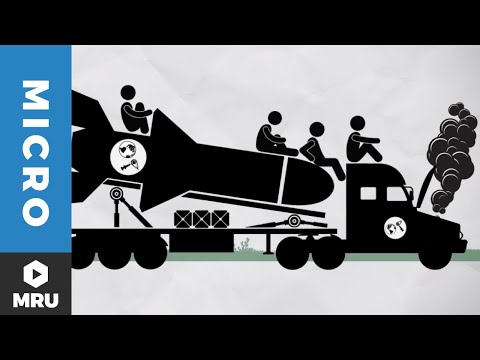
It is important to note that a public good is not defined by its production method (i.e., whether it is produced by the government or the private sector). For example, while mail delivery is provided by the government, it is not classified as a public good. Conversely, asteroid deflection is a public good, even though little of it is currently provided by the government.
Public goods are essential for societal welfare, yet they pose significant challenges for market provision. Understanding their characteristics and the implications for government intervention is crucial for effective policy-making. As we continue to explore economic concepts, the next focus will be on club goods, which present a different set of challenges and opportunities.





